Exploring the Benefits of High Nitrogen Fertilizer for 2026 Top Yields?
As agriculture faces increasing challenges, farmers seek effective solutions. High Nitrogen Fertilizer is one such option, promising enhanced crop yields. Its ability to boost plant growth can transform fields, leading to greater productivity.
The year 2026 may witness farmers leaning heavily on High Nitrogen Fertilizer. Many believe it’s the key to achieving top yields. However, reliance on this fertilizer raises questions. Is it sustainable? High Nitrogen Fertilizer can improve crop conditions, yet it may affect soil health over time.
Farmers should reflect on the long-term impacts. How does increased nitrogen influence biodiversity? While it may yield immediate results, the future of soil quality should not be overlooked. Balancing short-term gains with long-term sustainability is essential as we explore these methods.
Understanding High Nitrogen Fertilizer: Composition and Types
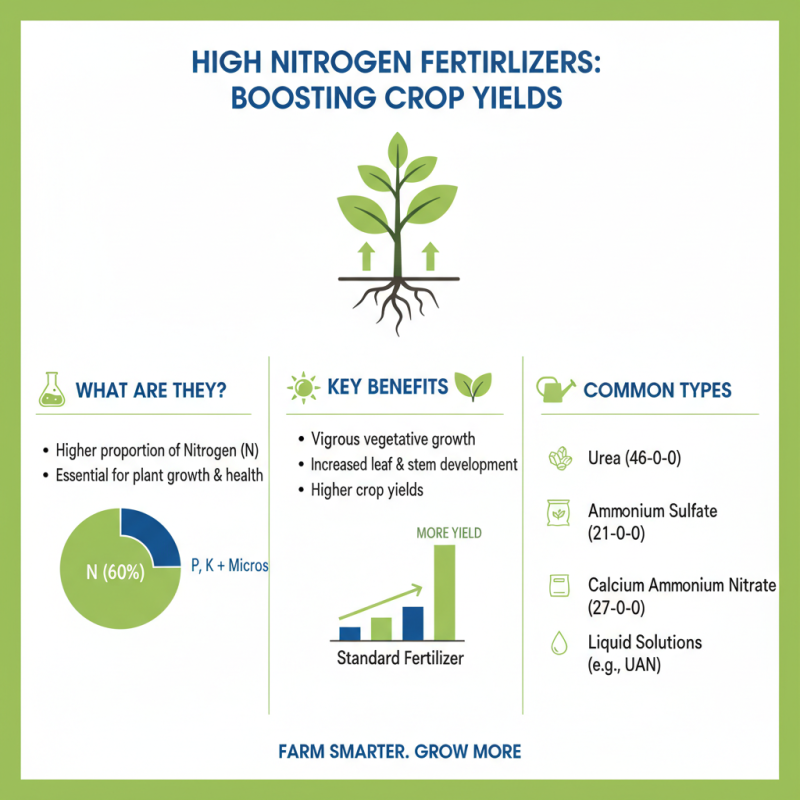
High nitrogen fertilizers are essential for boosting crop yields. They contain a higher proportion of nitrogen compared to other nutrients. Nitrogen promotes vigorous growth and enhances the overall health of plants. Understanding the composition and types of high nitrogen fertilizers can help farmers make informed choices.
Common forms include urea, ammonium nitrate, and calcium ammonium nitrate. Urea is one of the most widely used with around 46% nitrogen content. This form is highly effective but must be managed carefully to avoid volatilization losses. Ammonium nitrate, containing about 34% nitrogen, offers quick uptake for plants. This fast action is desirable, but it can pose risks if not handled properly. Too much nitrogen can lead to nutrient imbalances, affecting crop health.
According to industry reports, crops can show yield increases of 10-30% when nitrogen is applied appropriately. However, overuse can leach into waterways, causing environmental issues. Farmers should consider soil tests before applying fertilizers. The right balance is crucial. Too little nitrogen yields poor growth, while too much can harm both crops and ecosystems. Understanding these dynamics is key to sustainable agriculture.
Agronomic Benefits of High Nitrogen Fertilizer for Crop Yields
High nitrogen fertilizer can greatly boost crop yields. It provides essential nutrients needed for plant growth. Farmers often see substantial increases in production when using it. The timing of application is crucial. Too early or too late can lead to ineffective results.
Tips: Test soil nitrogen levels regularly. This helps determine the right amount needed. Over-fertilization can harm crops and the environment. Balanced use promotes healthy growth. Additionally, monitor weather conditions. Excessive rainfall can wash away nutrients, reducing effectiveness.
Using high nitrogen fertilizer comes with challenges. It can lead to growth spurts in plants. But too much nitrogen can result in lush foliage with few fruits or grains. It's a delicate balance. Understanding the needs of specific crops is vital. Research is key to maximizing benefits while minimizing drawbacks.
Impact of High Nitrogen Fertilizers on Soil Health and Microbiology
High nitrogen fertilizers have gained popularity among farmers aiming for higher crop yields. However, their impact on soil health and microbiology cannot be overlooked. Excessive nitrogen use can lead to soil degradation. It may disrupt microbial communities, affecting soil life.
Microorganisms play a crucial role in nutrient cycling. They help decompose organic matter and make nutrients available to plants. When nitrogen levels rise too sharply, beneficial bacteria may decline. The balance of soil ecosystems is fragile. A recovery of microbial diversity takes time and effort.
Farmers must consider these factors carefully. It’s essential to monitor nitrogen levels. Soil tests could guide appropriate fertilizer applications. Moreover, incorporating organic matter can help maintain soil health. The immediate benefits of high yields should not overshadow long-term sustainability. Balancing productivity and soil health is key for future farming practices.
Impact of High Nitrogen Fertilizer on Soil Health and Microbiology
This chart illustrates the correlation between high nitrogen fertilizer application rates and key soil health indicators, including microbial activity, soil pH, and organic matter content over a three-year period.
Best Practices for Applying High Nitrogen Fertilizers Effectively
High nitrogen fertilizers are vital for boosting crop yields. However, they must be applied carefully to avoid issues. Over-application can lead to environmental damage. Excess nitrogen can contaminate groundwater and harm local ecosystems.
Timing is crucial when applying high nitrogen fertilizers. Early-season application often gives crops a strong start. But farmers should monitor weather conditions. Rain can wash away nutrients. This can lead to wasted resources and less effective fertilization.
Using the right methods makes a difference too. Broadcasting is common, but sometimes it is ineffective. Side-dressing can ensure nutrients reach plant roots directly. Regular soil testing helps tailor applications. It can indicate what’s already available in the soil. Understanding crop needs is essential, yet many overlook this step. Each field is unique, and so are its requirements.
Potential Environmental Concerns Related to Nitrogen Fertilizer Use
High nitrogen fertilizers can significantly boost crop yields. However, their use raises environmental concerns. Excess nitrogen can lead to soil degradation. It also contributes to water pollution. Runoff can carry nitrogen into nearby water bodies. This causes eutrophication, which harms aquatic life.
According to the Environmental Protection Agency, nitrogen runoff is a major source of water quality issues. In fact, about 40% of U.S. rivers are impaired by nitrogen and phosphorus. These nutrients disrupt ecosystems and lead to dead zones in water, where few organisms can survive. These effects can be seen in places like the Gulf of Mexico.
Tips: Monitor nitrogen levels in soil. Use soil tests to optimize fertilizer application. Consider using cover crops to absorb excess nitrogen. This practice can mitigate negative impacts while maintaining yield potential. Adjusting your nitrogen application can promote sustainability in farming. Seeking a balance is crucial for both crops and the environment.