What is Food-Grade Sodium Nitrite and Its Uses?
Food-Grade Sodium Nitrite is often used in food preservation and safety. Dr. Emily Wong, a leading expert in food chemistry, notes, "Food-Grade Sodium Nitrite plays a critical role in preventing bacterial growth." This sodium compound is vital for curing meats, enhancing flavor, and improving color.
Its application, however, raises questions. Many consumers are unaware of the nuances involved in its use. For instance, the fine line between safety and risk demands attention. When added improperly, even Food-Grade Sodium Nitrite can lead to health concerns.
Moreover, understanding this substance requires deeper reflection. While it’s beneficial, the potential for misuse exists in unregulated environments. Thus, exploring Food-Grade Sodium Nitrite involves weighing its advantages against the possible drawbacks. It’s a conversation worth having for both industry professionals and curious consumers alike.
What is Food-Grade Sodium Nitrite: Definition and Composition
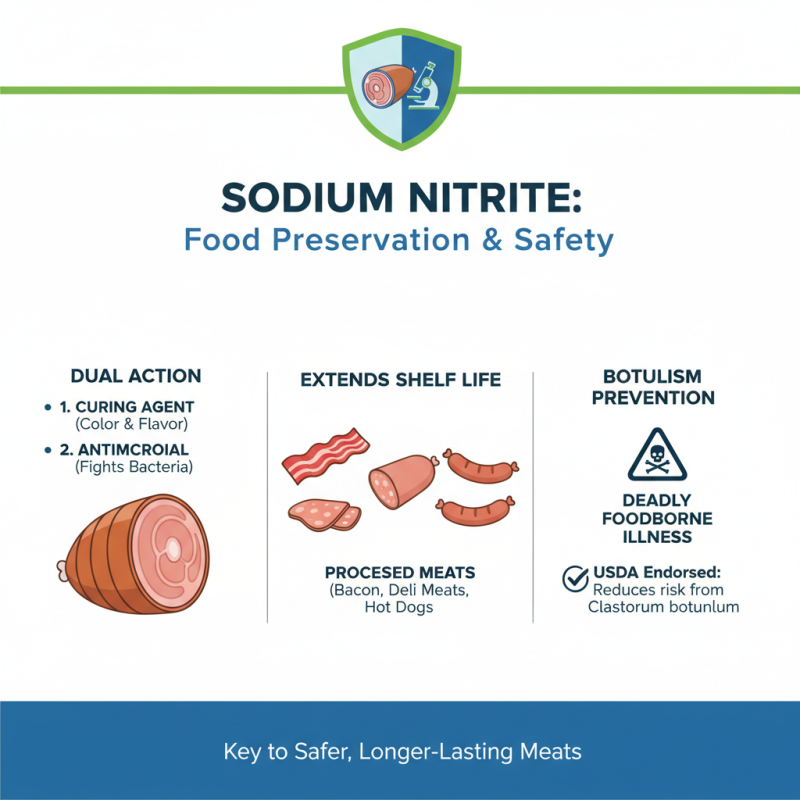
Food-grade sodium nitrite is a compound widely used in food preservation. It is a pale yellow crystalline powder. This compound consists primarily of sodium, nitrogen, and oxygen. Its chemical formula is NaNO2. In the food industry, sodium nitrite plays a crucial role. It helps in curing meats and enhancing color. This agent also adds flavor and extends shelf life.
The primary use of food-grade sodium nitrite is in processed meats. Bacon, ham, and hot dogs often contain this additive. It inhibits the growth of harmful bacteria, such as Clostridium botulinum. Without it, foods might spoil faster. However, the use of sodium nitrite raises questions and concerns. Some studies link it to health risks. Consumers are becoming more aware of these issues.
While many appreciate the benefits of sodium nitrite, it’s essential to reflect on consumption levels. Moderation is key. Natural alternatives are increasingly popular, raising awareness regarding synthetic additives. The conversation around sodium nitrite highlights the balance between safety and tradition. As the food landscape evolves, so do its challenges.
The Role of Sodium Nitrite in Food Preservation and Safety
Sodium nitrite is a widely used food preservative. It acts as both a curing agent and an antimicrobial. The use of sodium nitrite can extend the shelf life of various processed meats, such as bacon and deli meats. According to the USDA, sodium nitrite effectively reduces the risk of botulism, a deadly foodborne illness caused by Clostridium botulinum.
Research indicates that sodium nitrite inhibits the growth of harmful bacteria. In doing so, it contributes to overall food safety. A report from the International Journal of Food Science highlights that meats treated with sodium nitrite have lower bacterial counts compared to untreated counterparts. However, the benefits come with a responsibility. Overuse could lead to potential health risks, such as nitrosamine formation during cooking.
In recent years, public scrutiny has increased regarding additives in food. Consumers are becoming more aware of their choices. This awareness urges manufacturers to find a balance between food safety and health implications. While sodium nitrite remains effective, discussions about its long-term effects continue. A cautious approach is essential, as food safety must always come first.
Health Aspects: Evaluating the Risks and Benefits of Sodium Nitrite
Sodium nitrite, a common food additive, plays a crucial role in food preservation. It helps prevent bacterial growth, especially in cured meats. However, its use raises health concerns that deserve careful evaluation. Research indicates that while sodium nitrite may prevent foodborne illnesses, excessive consumption can lead to health risks. The World Health Organization suggests limiting intake to avoid potential toxicity.
Some studies link sodium nitrite to an increased risk of certain cancers. The International Agency for Research on Cancer has classified nitrates and nitrites as possible carcinogens. This classification has sparked debate among health experts. They emphasize moderation in consumption, balancing its benefits and potential risks.
Tips: Always check labeling for sodium nitrite content. Choose fresh or minimally processed foods when possible. Stay informed about dietary guidelines to maintain a healthy balance. Remember, a little knowledge goes a long way in navigating food choices responsibly.
Regulatory Standards and Guidelines for Food-Grade Sodium Nitrite
Food-grade sodium nitrite is widely used in the food industry as a preservative and color fixative. It helps prevent the growth of harmful bacteria, particularly Clostridium botulinum, which can cause foodborne illnesses. Regulatory bodies, such as the U.S. Food and Drug Administration (FDA) and the European Food Safety Authority (EFSA), have established strict guidelines for its use. According to a 2021 report, the acceptable daily intake (ADI) is set at 0.07 mg/kg body weight.
In 2020, the Codex Alimentarius provided standards for sodium nitrite usage in processed meats. The maximum permitted levels vary by product type. For example, processed meats like bacon could contain up to 150 mg/kg. However, consumers are often concerned due to potential health risks linked to sodium nitrite. This has led to ongoing debates about its safety and the need for regulatory reassessment.
Despite these regulations, some food producers exceed the recommended levels. This raises questions about compliance and food safety. Transparency in ingredient usage is crucial. Educating consumers about acceptable levels can empower better choices. It is essential for the industry to reflect on these practices and prioritize consumer health.
What is Food-Grade Sodium Nitrite and Its Uses? - Regulatory Standards and Guidelines for Food-Grade Sodium Nitrite
| Dimension |
Details |
| Definition |
Food-grade sodium nitrite is a sodium salt of nitrous acid, used as a preservative and color fixative in foods. |
| Common Uses |
Primarily used in cured meats, fish products, and as a flavor enhancer in certain foods. |
| Regulatory Bodies |
Regulated by entities such as the FDA and EFSA, which set limits on its usage in food products. |
| Maximum Allowed Levels |
Typically, a maximum limit of 200 ppm in cured meats according to regulatory standards. |
| Safety Considerations |
Regarded as safe at regulated levels, but excessive consumption can lead to health risks like methemoglobinemia. |
| Alternatives |
Alternatives include natural preservatives such as celery powder or ascorbic acid for similar effects. |
Applications of Sodium Nitrite in Meat Processing and Curing Techniques
Sodium nitrite is a key ingredient in meat processing. It serves multiple functions in curing techniques. One major role is preserving color in meats. It gives cured products a vibrant pink hue, making them more appealing. This color is especially important for products like ham and salami.
In addition to improving appearance, sodium nitrite helps prevent microbial growth. It inhibits bacteria such as Clostridium botulinum, which can cause food poisoning. However, the use of sodium nitrite must be carefully managed. Too much can lead to health concerns. It's essential to follow established guidelines to ensure safe levels are used.
The addition of sodium nitrite can affect flavor as well. It adds a distinct taste that many people associate with cured meats. While it enhances flavors, it doesn't always suit everyone’s palate. Some may find nitrates and nitrites off-putting. This has led to an ongoing debate about their use in modern meat processing.