Leave Your Message

Understanding Magnesium Nitrate Powder Uses Benefits and Safety Tips

Magnesium Nitrate Powder is a versatile compound that has garnered attention across various sectors due to its unique properties and benefits. As a water-soluble salt, it plays a crucial role in agriculture, providing essential nutrients for plant growth and enhancing soil quality. Additionally, it has found applications in industrial processes, where it acts as a dehydrating agent and a catalyst. This introduction seeks to explore the diverse uses of Magnesium Nitrate Powder, shedding light on its benefits and the safety precautions necessary for handling it.

Understanding the multifaceted applications of Magnesium Nitrate Powder is essential for both professionals and enthusiasts within agriculture and industry. With its ability to deliver vital magnesium and nitrogen to plants, it aids in improving crop yields and overall health. Furthermore, its relevance in chemical processes highlights its importance in industrial settings. However, as with any chemical substance, safe handling protocols are paramount. This introduction will provide insights into effectively utilizing Magnesium Nitrate Powder while ensuring safety and compliance in its applications.

Understanding Magnesium Nitrate Powder Uses Benefits and Safety Tips

Understanding Magnesium Nitrate Powder: Overview and Composition

Magnesium nitrate powder is an inorganic compound composed of magnesium, nitrogen, and oxygen, with the chemical formula Mg(NO3)2. This crystalline substance is highly soluble in water, making it a versatile option for various applications. The compound typically appears as a white solid that can absorb moisture from the air, a property that necessitates careful storage conditions to maintain its effectiveness.


The primary composition of magnesium nitrate consists of magnesium ions (Mg²⁺) and nitrate ions (NO3⁻), which contribute to its unique properties and benefits. Due to its solubility, magnesium nitrate is often utilized in agricultural settings as a fertilizer, providing essential nutrients that promote plant growth. Additionally, its hygroscopic nature allows it to retain moisture in soil, enhancing water retention in arid environments.


In the industrial sector, it may serve in chemical synthesis or as a dehydrating agent, showcasing its importance across different fields. Understanding its composition can help users optimize its applications while ensuring safety during handling and usage.
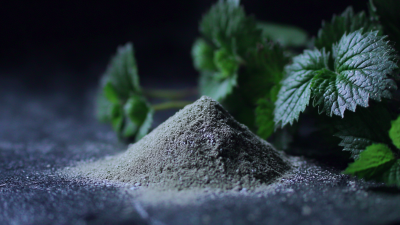

Key Uses of Magnesium Nitrate Powder in Agriculture and Industry

Understanding Magnesium Nitrate Powder Uses Benefits and Safety Tips

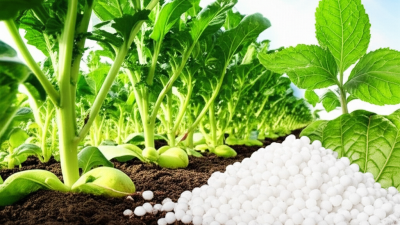
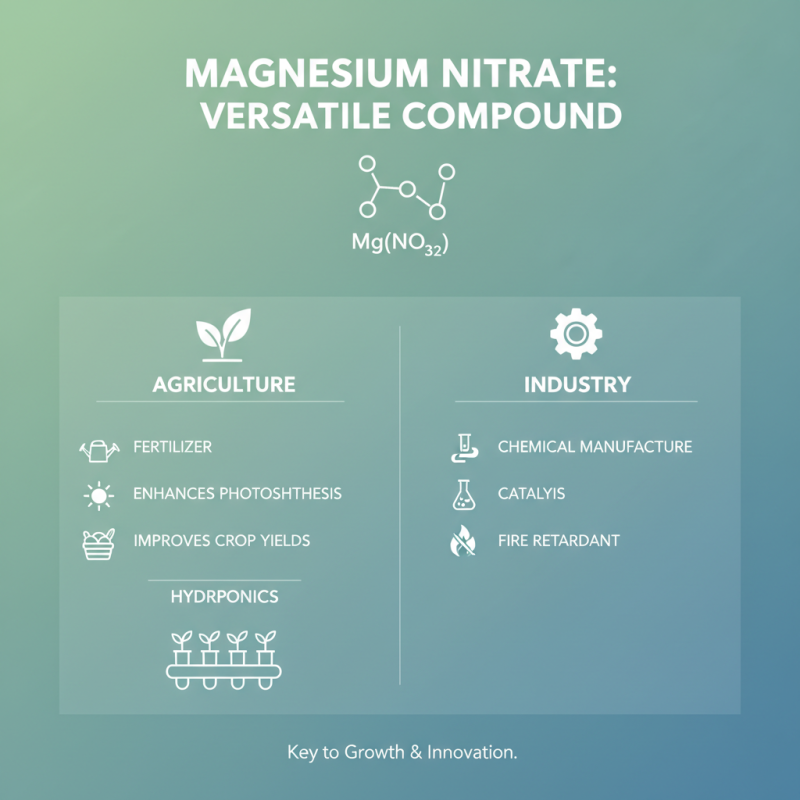
Magnesium nitrate powder is a versatile compound with significant applications in agriculture and industry. In agriculture, it serves primarily as a fertilizer due to its high solubility and nutrient content. The presence of magnesium helps enhance photosynthesis in plants, leading to improved growth and crop yields. Additionally, magnesium nitrate is used in hydroponics, where plants are grown without soil, providing essential nutrients directly to the roots in a water-based solution.

In the industrial sector, magnesium nitrate is utilized as a flame retardant in various materials, including textiles and plastics, which enhances safety by reducing flammability. It is also employed in making concrete and other construction materials, where it aids in promoting early strength and reducing the risk of cracking. The versatility of magnesium nitrate makes it an essential component in multiple processes.

**Tips**: When using magnesium nitrate in agriculture, it’s essential to follow the recommended application rates to avoid nutrient burn in plants. Always ensure proper soil testing before application to tailor your fertilizer strategy to your specific soil needs. In industrial applications, handling magnesium nitrate with care is crucial, as it can be hygroscopic and may absorb moisture from the air, affecting its performance and handling.

Health Benefits of Magnesium Nitrate: Analyzing Nutritional Aspects

Magnesium nitrate, a soluble compound derived from magnesium, plays a crucial role in various biological processes, contributing significantly to health and wellness. One of the primary health benefits of magnesium nitrate lies in its ability to support cardiovascular health. Research indicates that adequate magnesium levels help maintain normal blood pressure and prevent hypertension, which is vital given that approximately 46% of adults in the United States have high blood pressure, according to the CDC. Moreover, magnesium is essential for maintaining proper muscle and nerve function, enabling effective communication between the brain and body.

In addition to cardiovascular support, magnesium nitrate offers benefits for bone health by assisting in calcium absorption and retention. A study published in the "Journal of Nutrition" highlighted that magnesium is crucial for bone density, emphasizing that a deficiency can lead to osteoporosis and fractures, especially in older adults. Including magnesium nitrate in your diet could thus play a preventive role in such conditions, with the National Institutes of Health reporting the recommended dietary allowance for adult men and women to be 400-420 mg and 310-320 mg, respectively.

Tips: To incorporate magnesium nitrate safely into your regimen, consider consulting with a healthcare provider, especially if you have underlying health conditions or are on medication. Additionally, balance your diet with magnesium-rich foods like leafy greens and nuts, which can naturally enhance magnesium intake without the risk of over-supplementation. Staying hydrated is also crucial, as hydration impacts the body’s ability to utilize magnesium effectively.

Health Benefits of Magnesium Nitrate Powder

Safety Protocols: Handling and Storing Magnesium Nitrate Powder

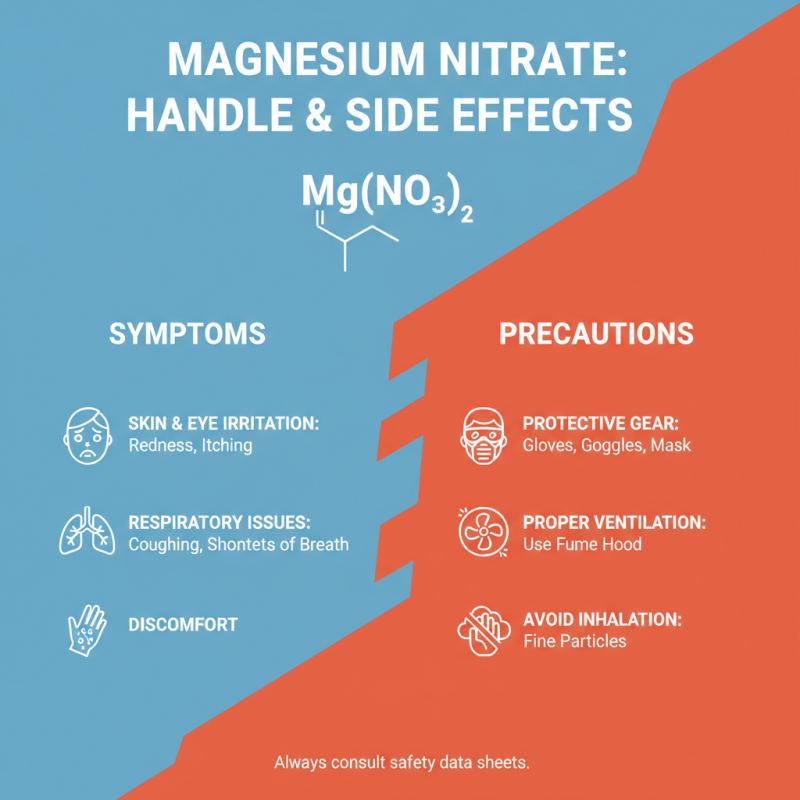
When handling and storing magnesium nitrate powder, it is essential to adhere to strict safety protocols to ensure both personal safety and environmental protection. First and foremost, users should wear appropriate personal protective equipment (PPE), including safety goggles, gloves, and respiratory masks, to minimize exposure to dust or particles that may arise during handling. It is equally important to work in a well-ventilated area to prevent inhalation of any harmful substances. Additionally, it is advisable to avoid eating, drinking, or smoking in the vicinity of the powder to maintain hygiene and reduce the risk of contamination.

Storage of magnesium nitrate powder also requires careful consideration. The powder should be kept in a cool, dry place, away from direct sunlight and moisture to prevent degradation or unwanted reactions. Containers should be tightly sealed and clearly labeled to avoid mix-ups with other chemicals. It is crucial to keep magnesium nitrate away from incompatible substances, which could lead to chemical reactions that may pose risks. Regularly inspecting storage areas for leaks or spills is an essential step in maintaining a safe working environment. By following these safety protocols, individuals can handle magnesium nitrate powder effectively while minimizing any associated risks.

Understanding Magnesium Nitrate Powder Uses Benefits and Safety Tips

Dimension Details
Chemical Formula Mg(NO3)2
Appearance White crystalline powder
Primary Uses Fertilizers, food preservation, and wastewater treatment
Benefits Provides magnesium nutrients, enhances plant growth, and helps in moisture retention
Safety Tips Wear gloves and goggles, avoid inhalation, and store in a cool, dry place
Storage Conditions Keep sealed in original container, away from moisture and direct sunlight

Potential Risks and Side Effects of Magnesium Nitrate Exposure

Understanding Magnesium Nitrate Powder Uses Benefits and Safety Tips

Magnesium nitrate, while beneficial in various applications, poses certain risks and potential side effects that users should be aware of. Direct exposure to magnesium nitrate powder can lead to irritation of the skin, eyes, and respiratory tract. Symptoms may include redness, itching, or discomfort in the affected areas. Inhalation of fine particles can provoke respiratory issues, especially in individuals with pre-existing conditions like asthma or bronchitis, making proper ventilation and protective gear essential during handling.

Ingesting magnesium nitrate can also lead to gastrointestinal discomfort. Symptoms such as nausea, diarrhea, or abdominal pain may arise, particularly if consumed in significant amounts. Although magnesium is an important nutrient, excess intake can lead to imbalances, potentially resulting in complications such as low blood pressure or irregular heartbeat. Therefore, careful management of dosage and adherence to safety guidelines is paramount to mitigate these risks and ensure safe usage of magnesium nitrate powder.