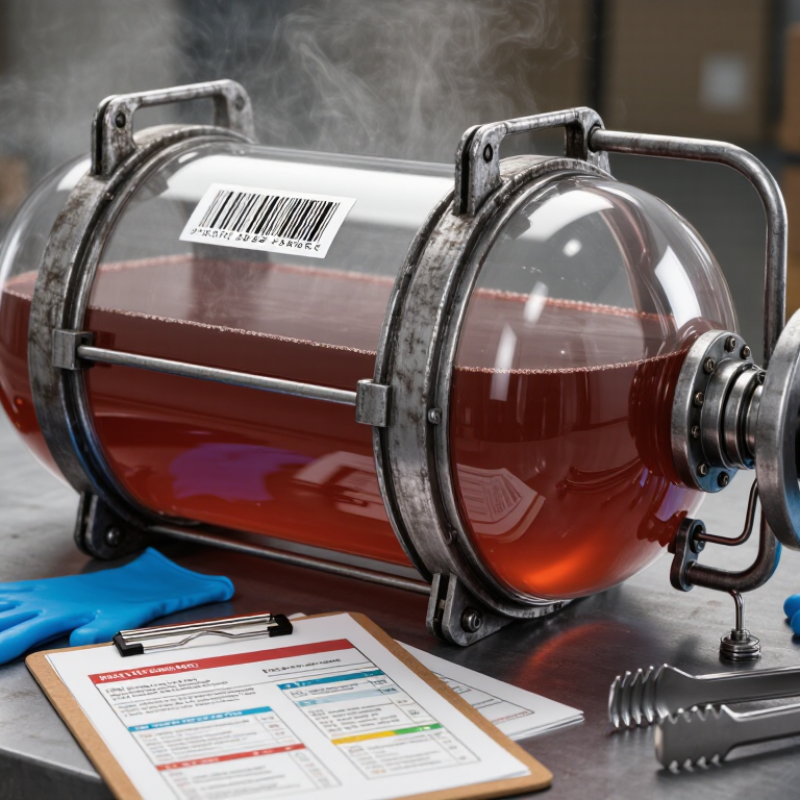
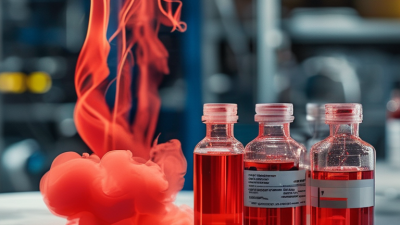
Red Fuming Nitric Acid is a specialized industrial chemical requiring disciplined purchasing, technical verification, and careful supply-chain planning. This global buyers guide explains the material beyond its striking reddish-brown appearance. Its dense fumes, strong oxidizing behavior, and sensitivity to contamination demand more than a competitive quotation.
Trevor Kletz, a respected process-safety author, wrote, “If you think safety is expensive, try ignorance.” That warning remains relevant for every Red Fuming Nitric Acid buyer. A reliable purchasing decision should examine concentration, stabilizer requirements, container compatibility, batch documentation, and storage conditions. Supplier experience also matters. Ask for a current safety data sheet, certificate of analysis, transport classification, and documented quality system.
The buying process should feel concrete. Imagine reviewing a sealed compatible container, checking its lot number, and confirming temperature controls before dispatch. These details protect product integrity and people. They also reduce delays at customs and receiving facilities. Regional rules can differ, even between neighboring markets. Buyers must therefore confirm requirements with qualified compliance professionals and approved logistics providers.
Price alone is a weak measure of value. A cheaper offer may exclude testing, compliant packaging, insurance, or specialized transport. That creates hidden costs later. It sounds simple. It is not.
This guide focuses on responsible commercial evaluation, not improvised handling. It compares supplier qualifications, documentation quality, delivery planning, and risk controls. Some specifications may still require expert review. That uncertainty should be acknowledged, not concealed. A careful buyer asks better questions before signing a contract.
Red fuming nitric acid is a highly concentrated nitric acid solution containing dissolved nitrogen oxides. Its reddish-brown color comes from these oxides, not from added dye. The material can release dense, irritating fumes when exposed to air. It is strongly corrosive and also acts as a powerful oxidizing substance.
In international transport, it is commonly identified as UN 2032, Nitric Acid, Red Fuming. It is generally assigned to Class 8 for corrosive hazards, with an oxidizing subsidiary risk in applicable systems. Exact classification can depend on concentration, packaging, transport mode, and local regulations.
A reliable buyer should examine the current Safety Data Sheet before placing an order. Check the product name, concentration range, hazard statements, UN number, packing group, and emergency guidance. GHS labels and transport documents should match the material supplied. Classification is not always as simple as color. A similar-looking liquid may have different nitrogen oxide content and different legal requirements. This is an area where assumptions can become expensive, or dangerous.
Tips: Ask for recent batch specifications, transport documents, and storage compatibility information. Confirm that the supplier supports compliant delivery to your location. Use corrosion-resistant equipment and suitable ventilation. Do not rely on a marketplace description alone. Expert review is worthwhile when national rules differ.
Red fuming nitric acid is produced through the established Ostwald process. Ammonia is oxidized over a platinum-rhodium catalyst at roughly 800–930°C, forming nitric oxide. This gas is cooled and oxidized into nitrogen dioxide before absorption in water. The European Commission’s Large Volume Inorganic Chemicals BREF identifies catalytic oxidation, absorption efficiency, and nitrous oxide control as major performance factors in nitric acid plants.
The final formulation contains a high nitric acid concentration and dissolved nitrogen oxides, especially nitrogen dioxide. These oxides create the characteristic red-brown appearance and strong fumes. Commercial grades commonly fall near 84–97% nitric acid, although exact composition depends on specification and stabilisation requirements. The U.S. National Institute for Occupational Safety and Health classifies nitric acid as a severe corrosive and oxidizer, so buyers must review purity, water content, container compatibility, and transport documentation together.
Manufacturers normally adjust concentration under closed, corrosion-resistant systems. Stainless steel alone may be unsuitable. Alloy selection requires professional compatibility testing. A 2023 International Energy Agency review also highlights industrial nitrous oxide reduction as an important emissions priority in nitric acid production. That matters because environmental performance can differ greatly between plants. Buyers should request a current certificate of analysis, impurity limits, batch traceability, and safety data sheet. Specifications can look similar on paper, yet storage behavior may differ. That detail is easy to underestimate.
| Data Dimension | Typical or Commonly Reported Data | Buyer and Formulation Relevance | Verification Point |
|---|---|---|---|
| Product identity | Red fuming nitric acid (RFNA) is concentrated nitric acid containing a substantial amount of dissolved nitrogen oxides, especially nitrogen dioxide. | The dissolved nitrogen oxides give the liquid its reddish-brown color and visible fuming behavior. | Confirm the exact product name, concentration range, and safety data sheet classification. |
| Chemical composition | The principal components are nitric acid, water, and dissolved nitrogen oxides. Composition varies by grade and specification. | A higher nitrogen-oxide content generally produces stronger red coloration and more intense fuming, but also increases handling complexity. | Request a certificate of analysis showing nitric acid, nitrogen oxides, water, and relevant impurities. |
| Nitric acid concentration | Commercial RFNA specifications commonly use concentrated nitric acid, often in the approximate range of 86% to 98% HNO₃ by mass, depending on the grade. | The required concentration affects oxidizing strength, density, freezing behavior, compatibility, and regulatory classification. | Do not rely on color alone; verify the assay method, acceptance limits, and test temperature. |
| Appearance | Typically reddish-brown to orange-brown liquid with a sharp, pungent odor and visible fumes in moist air. | Color intensity can change with temperature, dissolved gas content, light exposure, and storage history. | Use appearance only as a preliminary check, not as a quality-control release criterion. |
| Physical state and volatility | Liquid at ambient conditions; nitrogen oxides can evolve from the liquid, especially when warmed, agitated, or exposed to reduced pressure. | Vapor control, closed transfer, temperature management, and compatible ventilation are essential for storage and use. | Review vapor-pressure information and emergency-control requirements in the current SDS. |
| Density | Density is grade- and temperature-dependent; concentrated nitric acid is commonly around 1.4–1.55 g/cm³ near room temperature, while dissolved nitrogen oxides can shift the value. | Density is important for filling calculations, inventory reconciliation, metering, and mass-to-volume conversion. | Specify the reference temperature and the laboratory test method. |
| How RFNA is produced | Industrial nitric acid is produced by catalytic oxidation of ammonia to nitrogen oxides, followed by oxidation and absorption in water. RFNA is then prepared by concentrating the acid and retaining or adding controlled dissolved nitrogen oxides under an approved industrial process. | The final product must meet tightly controlled composition, impurity, color, stability, and packaging requirements. | Request process-quality documentation rather than attempting production outside a properly licensed chemical facility. |
| Formulation approach | A formulation generally consists of concentrated nitric acid, water at a controlled level, and dissolved nitrogen oxides. Specialized inhibited grades may contain a corrosion-control additive specified by the applicable standard. | Exact proportions are specification-dependent and should be defined by the end-use, materials of construction, and regulatory requirements. | Confirm whether the purchase requires standard RFNA or an inhibited formulation, and obtain the complete composition range from the supplier. |
| Oxidizing behavior | RFNA is a powerful oxidizing and corrosive liquid. It can intensify combustion and react violently with many organic, reducing, and combustible materials. | Segregated storage and strict contamination control are required throughout receiving, transfer, and use. | Conduct a formal chemical-compatibility review before selecting equipment or packaging. |
| Common industrial applications | Uses may include specialized propulsion oxidizer systems, controlled nitration or oxidation research, and selected high-energy or aerospace applications subject to authorization. | The intended use determines the required grade, impurity limits, inhibitor status, documentation, and end-user licensing. | Ask for end-use declarations and confirm that the application is legally authorized in the destination country. |
| Typical impurities of concern | Potentially relevant impurities include chloride, sulfate, metallic ions, organic contamination, insoluble matter, and uncontrolled water content. | Trace contaminants can affect corrosion, decomposition, storage stability, process performance, and compatibility with downstream equipment. | Set numerical limits for each critical impurity before issuing a purchase order. |
| Packaging materials | Packaging must be specifically approved for concentrated fuming nitric acid. Materials may include compatible fluoropolymer-lined systems or other qualified containers; ordinary metals, plastics, and elastomers may fail rapidly. | Container compatibility depends on concentration, temperature, inhibitor status, mechanical design, and storage duration. | Obtain written compatibility confirmation for the exact product and container design. |
| Transport classification | Red fuming nitric acid is commonly associated with UN 2032, “Nitric acid, fuming, red,” in transport systems that use this designation. It is generally treated as a Class 8 corrosive substance with an oxidizing subsidiary hazard. | Transport rules can differ by mode and jurisdiction, and additional controls may apply to high-concentration oxidizers. | Verify the current UN entry, packing instruction, labels, emergency response information, and carrier acceptance before shipment. |
| Storage conditions | Store in a cool, dry, secure, well-ventilated, dedicated area away from heat, sunlight, combustibles, organic materials, reducing agents, bases, and incompatible metals. | Temperature excursions and contamination can increase fuming, pressure buildup, corrosion, and decomposition risk. | Define maximum storage temperature, inspection frequency, ventilation, secondary containment, and shelf-life requirements. |
| Quality-control tests | Common controls include nitric acid assay, nitrogen-oxide content, water content, density, color or appearance, insoluble matter, metallic impurities, chloride, sulfate, and stability-related checks. | The test panel should reflect the buyer’s process sensitivity and the applicable technical specification. | Require batch-specific results, analytical methods, sampling procedures, and retest rules. |
| Documents to request | Safety data sheet, certificate of analysis, specification sheet, batch traceability record, transport documentation, packaging approval, and emergency-response information. | Complete documentation supports customs clearance, workplace risk assessment, receiving inspection, and regulatory audits. | Ensure documents are current, consistent with the shipment label, and available in the required language. |
| Buyer’s specification checklist | Define acid concentration, nitrogen-oxide range, inhibitor status, impurity limits, density range, container size, packaging material, shelf life, delivery terms, and required regulatory documents. | A detailed specification reduces the risk of receiving a chemically different grade that is unsuitable for the intended equipment or process. | Use the final approved specification as the acceptance standard for every shipment. |
| Health and emergency hazards | RFNA can cause severe skin and eye burns. Its fumes may contain corrosive and toxic nitrogen oxides that can damage the respiratory system and may cause delayed pulmonary effects. | Handling requires engineered containment, suitable respiratory protection programs, emergency showers, eyewash facilities, spill controls, and trained personnel. | Follow the current SDS, occupational-exposure rules, and site-specific emergency procedures; never handle without professional authorization. |

Red fuming nitric acid (RFNA) is a concentrated nitric acid mixture containing dissolved nitrogen dioxide. Its color ranges from orange to deep red. The shade depends on nitrogen dioxide concentration and storage conditions. Typical commercial grades contain about 84–97.5% nitric acid, although specifications vary by application and supplier.
PubChem lists nitric acid with a molecular weight of 63.01 g/mol, a density near 1.51 g/cm³, and a boiling point around 83°C. RFNA can behave differently because dissolved nitrogen oxides alter vapor pressure, color, and thermal stability. The vapor is highly corrosive and may irritate the lungs before discomfort becomes obvious. NOAA’s CAMEO Chemicals database identifies nitric acid as a powerful oxidizer that reacts dangerously with many organic materials and reducing agents. Keep this point visible.
Its chemistry also explains the handling risk. Contact with water releases substantial heat, while contact with metals can generate toxic nitrogen oxides and hydrogen. NIOSH guidance lists a 2 ppm ceiling exposure limit for nitric acid, showing how small airborne concentrations matter. Buyers should request concentration, density, inhibitor content, impurity limits, packaging compatibility, and current safety documentation. Data sheets may not align perfectly; formulation and test temperature can change reported values. That inconsistency deserves careful review, not quick acceptance.
Red fuming nitric acid (RFNA) is a highly concentrated nitric acid oxidizer containing dissolved nitrogen oxides, especially nitrogen dioxide, which gives it its red-brown color and dense fumes. The ranges shown are representative values because concentration, density, freezing behavior, and nitrogen oxide content vary by formulation and temperature. RFNA is highly corrosive, strongly oxidizing, and reacts dangerously with many organic or combustible materials.
Data basis: representative technical ranges for RFNA formulations; always verify the current supplier specification and safety data sheet before handling, transport, or procurement.
Red fuming nitric acid is a highly concentrated oxidizing liquid with reddish-brown fumes. Its color comes from dissolved nitrogen dioxide. Industrial users treat it as a controlled process chemical, not an ordinary laboratory reagent.
Around the world, aerospace manufacturers use it in specialized propulsion research and selected defense-related industrial programs. These applications require closed systems, trained personnel, and strict regulatory approval. In chemical manufacturing, it supports certain nitration and oxidation processes. Products may include intermediates for dyes, polymers, pharmaceuticals, and agricultural chemicals. The exact use depends on local permits and facility design.
Some laboratories use small quantities for advanced materials research and analytical work. Universities usually follow chemical hygiene plans, fume-control procedures, and documented waste handling. The material is also relevant to emergency planning because fumes can spread beyond the immediate work area. That risk is easy to underestimate. A quiet container may still hold an aggressive oxidizer.
Global demand is uneven. Large industrial regions may import it for aerospace or chemical production, while other markets restrict it heavily. Buyers should verify concentration, packaging compatibility, transport rules, supplier credentials, and end-use documentation. They should also consult current national regulations before any purchase. Practices vary more than many global guides suggest.
Red fuming nitric acid is a highly corrosive oxidizing liquid that releases red-brown nitrogen oxide fumes. Global buyers should define the intended industrial application before comparing offers. Purity alone is not enough. A reliable specification may include nitric acid concentration, water content, dissolved nitrogen oxides, trace metals, appearance, and batch consistency. Small differences can affect process control and equipment life.
Ask suppliers for a current safety data sheet, batch-specific certificate of analysis, transport classification, and packaging details. Check whether testing follows recognized laboratory methods. Third-party verification can strengthen confidence, but it cannot replace an internal technical review. A supplier’s production history, quality system, export experience, and incident records also deserve attention. Certifications help. They are not automatic proof of performance.
Safety evaluation should include corrosion-resistant containers, sealed packaging, trained handlers, emergency response plans, and legally compliant transport arrangements. Buyers should confirm that their facility can receive, inspect, and store the material under approved conditions. Never judge quality by color alone, because lighting and container condition can mislead. No checklist is perfect. I would request a small, lawful qualification shipment only when regulations and site controls permit it. Unexpected fumes, damaged seals, unclear documents, or inconsistent results should stop the purchase until qualified professionals investigate.