What Are the Top Calcium Nitrate Granular Suppliers?
Choosing reliable Calcium Nitrate Granular suppliers requires more than comparing prices. Product consistency, nutrient analysis, granule strength, packaging, and delivery performance all matter. A low-cost shipment can become expensive when granules arrive damp, dusty, or unevenly sized. Field conditions matter too. Calcium nitrate should match the crop, soil, irrigation system, and application schedule. Supplier documentation should clearly show calcium and nitrogen content. Batch numbers and certificates of analysis add practical confidence.
Dr. Andrew Margenot, a soil fertility specialist at the University of Illinois Urbana-Champaign, offers a useful principle: “Good nutrient decisions begin with evidence.” That idea should guide supplier evaluation. Buyers should examine laboratory reports, quality-control procedures, storage conditions, and customer feedback from comparable farming operations. Experienced suppliers can explain how their Calcium Nitrate Granular performs in fertigation, greenhouse production, or open-field applications. They should also discuss moisture control and recommended handling practices without making exaggerated promises.
The strongest suppliers are not always the largest companies. Regional availability, technical support, and response speed can influence real results. Ask difficult questions. Weak answers are revealing. A polished website cannot replace traceable quality records or dependable communication. I also recognize a limitation here: supplier performance can change by country, season, and production batch. Therefore, this guide should be used as a starting point, not a final verdict. The top Calcium Nitrate Granular supplier is the one that combines verified quality, transparent service, suitable logistics, and advice grounded in actual crop needs.
Calcium Nitrate Granules: 15.5% Nitrogen and 19% Calcium Content
What Are the Top Calcium Nitrate Granular Suppliers?
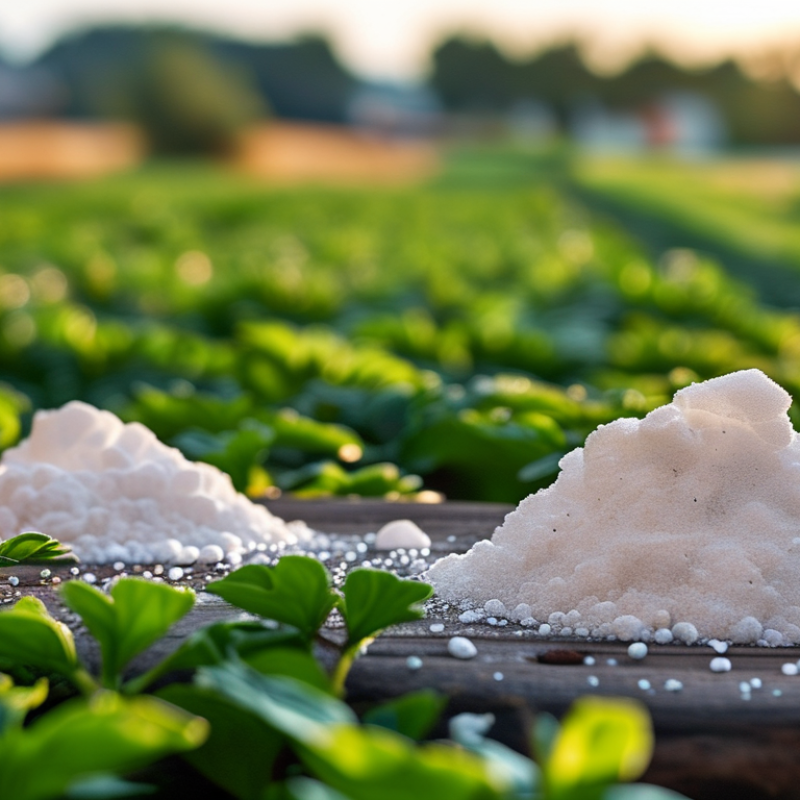
Calcium nitrate granules typically contain 15.5% nitrogen and 19% calcium by weight. A 100-kilogram bag therefore supplies 15.5 kilograms of nitrogen and 19 kilograms of calcium. The nitrogen is highly soluble, while calcium supports cell-wall strength and fruit firmness. These figures should appear clearly on the product specification and certificate of analysis. Do not rely only on a sales sheet.
Supplier quality matters beyond nutrient percentages. The International Fertilizer Association reports that global fertilizer demand remains above 180 million tonnes of nutrients annually, increasing pressure for consistent, efficient products. For calcium nitrate, buyers should check granule size distribution, moisture, caking resistance, and dissolution speed. FAO soil-management guidance also emphasizes balanced nutrient application, because excessive nitrogen can reduce nutrient efficiency and increase environmental losses. Product traceability is essential.
Look for documented batch testing.
A strong supplier should provide recent laboratory results, packaging details, storage instructions, and transport records. Granules that remain free-flowing in humid storage are easier to spread accurately. Still, supplier comparisons are not always perfect. Some reports use different definitions, and calcium content may be expressed differently across markets. I would verify whether the stated 19% calcium means elemental calcium, not calcium oxide. That small detail can change purchasing decisions. Field trials, local water quality, and crop requirements should guide the final selection.
Supplier Ranking Criteria: Purity, 2–4 mm Granule Size, and Capacity
Top calcium nitrate granular suppliers should be ranked by measurable quality, not production claims alone. The International Fertilizer Association’s 2024 Medium-Term Fertilizer Outlook projects global nutrient demand near 200 million tonnes by 2028. That scale makes consistent supply important, but calcium nitrate still requires product-level verification.
Purity should be checked against a recent certificate of analysis. Commercial calcium nitrate commonly contains about 15.5% total nitrogen and 19% calcium oxide, although formulations differ. Buyers should confirm insoluble matter, moisture, chloride, and heavy-metal results. The FAO Fertilizer and Plant Nutrition guidance supports testing nutrient concentration and contaminant limits before application. A clean white granule is not proof of purity.
Granule size needs equal attention. A practical supplier benchmark is a 2–4 mm fraction, measured through calibrated sieves. Ask for the percentage within range, not merely the stated range. Oversized particles can disrupt spreader calibration. Fine dust can increase handling losses. Capacity should include annual output, reserve stock, and monthly loading capability. CRU fertilizer market assessments repeatedly show that logistics can tighten supply during seasonal demand peaks. One weakness in my own screening would be overvaluing advertised capacity. A smaller facility with stable 2–4 mm production may outperform a larger plant with inconsistent batches. Production records, retained samples, and independent laboratory tests provide stronger evidence than brochures.
Global Producers: Regional Output, Certifications, and Export Coverage
Regional output matters more than a supplier’s website claims. The International Fertilizer Association’s 2024 outlook estimates global fertilizer demand at roughly 200 million tonnes of nutrients annually. Calcium nitrate remains a specialized segment, serving protected crops, fertigation, and greenhouse production. Europe and East Asia provide strong manufacturing capacity, while producers in the Middle East and Mediterranean benefit from efficient port access. North American supply is more regional, with shorter delivery lanes supporting controlled-environment agriculture.
Certification separates established exporters from occasional traders. Serious granular suppliers should provide ISO 9001 quality systems, ISO 14001 environmental controls, and current safety data sheets. European shipments also require REACH and CLP compliance where applicable. Product records should state nitrogen and calcium content, moisture, granule size, insoluble matter, and caking performance. Small details matter.
Export coverage is visible in shipping options. Reliable suppliers normally offer bulk, one-tonne bags, and moisture-resistant smaller packaging. UN Comtrade data under HS 310260 can help buyers compare reported trade flows, although customs classifications are not perfectly consistent. IFA reports also show how exposed fertilizer markets remain to energy and transport costs. That warning deserves attention. A low quoted price may hide weak port infrastructure, limited certificates, or uncertain batch consistency. Buyers should request recent certificates of analysis, loading-port records, and destination-country registration evidence before ranking suppliers.
What Are the Top Calcium Nitrate Granular Suppliers?
Global producers by regional output, certification readiness, and export coverage
How to read the chart
Asia-Pacific and Europe account for the largest estimated shares of global granular calcium nitrate production capacity, while North America, Latin America, and the Middle East & Africa provide additional supply and export coverage. The figures are regional estimates because customs classifications do not consistently separate granular calcium nitrate from other calcium nitrate forms.
Key certifications
ISO 9001, ISO 14001, REACH, CLP, ADR and IMDG are commonly relevant to international supply.
Export coverage
European and Asian supply networks generally offer the broadest access to overseas fertilizer markets.
Data basis
Synthesized from public fertilizer-industry, regulatory, production and customs reporting; values are estimates, not audited company disclosures.
Comparing Prices, 25 kg Packaging, Minimum Orders, and Lead Times
Choosing a calcium nitrate granular supplier requires more than comparing the lowest quotation. In procurement practice, recent trade offers often range from US$350 to US$650 per metric ton, before freight, insurance, and taxes. Prices change with origin, nitrogen content, granule quality, and seasonal demand. The World Bank’s fertilizer price data also shows continuing market volatility, so a single online price is rarely reliable.
Packaging affects the real cost. A standard 25 kg bag equals 40 bags per metric ton. Suppliers may use woven polypropylene bags, laminated sacks, or moisture-resistant inner liners. The difference matters during humid storage. Some exporters accept one metric ton, while others require 20 to 24 tons, close to one container load. Smaller minimum orders cost more per bag. They may still suit trial purchases.
Lead times commonly range from 7 to 30 days after payment and specification approval. Port congestion can add another one or two weeks. The IFA Medium-Term Fertilizer Outlook estimates global fertilizer nutrient demand above 200 million tonnes annually, indicating strong pressure on production and logistics capacity. Request a written validity period for every offer. A spreadsheet can still mislead. I would check assay, granule size, certificates, pallet configuration, and delivery terms together. Some quotations look cheap because inland transport is excluded. That mistake is easy to make.