Top 10 Uses and Benefits of Urea Ammonium Nitrate in Agriculture
Urea Ammonium Nitrate is a popular fertilizer in modern agriculture. It combines urea and ammonium nitrate, providing essential nitrogen for plants. This blend enhances crop yield and promotes healthy growth. Farmers value this product for its efficiency and effectiveness.
In recent years, Urea Ammonium Nitrate has become a go-to choice among agricultural professionals. It supports various crops, including cereals and vegetables. Many studies show that it can increase soil fertility when used properly. However, there are concerns about over-application. Excessive use may lead to environmental issues, such as nitrate runoff.
Understanding the balance is crucial for sustainable farming. Urea Ammonium Nitrate presents numerous benefits, yet careful consideration is necessary. Farmers need to apply it wisely, ensuring optimal results while protecting the ecosystem. Balancing productivity with responsibility remains a challenge in agriculture today.

Overview of Urea Ammonium Nitrate in Agriculture
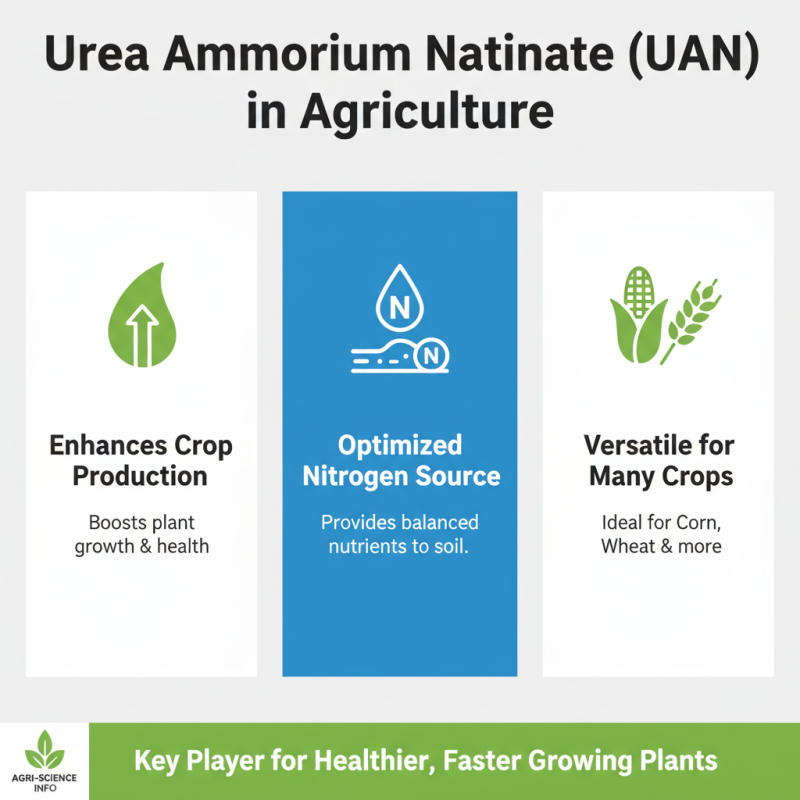
Urea Ammonium Nitrate (UAN) is gaining popularity in modern agriculture. This liquid fertilizer combines urea and ammonium nitrate. It offers a balanced nutrient supply to crops. Studies show that UAN can increase nitrogen uptake by up to 20%. This leads to greater crop yields.
Farmers often use UAN in a wide range of applications. It can be injected directly into the soil. This method reduces nitrogen loss through volatilization. However, some farmers find challenges with application rates. Over-application can lead to nutrient runoff. This is a concern for water quality. Research suggests that managing UAN carefully can offset these issues.
Additionally, UAN is favorable due to its versatility. It can be applied to various crops, including corn and wheat. A report from the International Fertilizer Association indicates that nitrogen use efficiency can reach 50% with proper UAN use. Yet, achieving optimal efficiency requires monitoring soil conditions. A one-size-fits-all approach does not work here. Understanding local soil health is essential for effective use of UAN.
Top 10 Uses and Benefits of Urea Ammonium Nitrate in Agriculture
| Use/Benefit |
Description |
Nitrogen Content (%) |
Application Rate (kg/ha) |
| Soil Fertility Enhancement |
Improves overall nutrient availability in soil. |
46% |
200-300 |
| Increased Crop Yields |
Promotes faster growth, leading to higher yields. |
46% |
200-250 |
| Versatile Application |
Can be applied in various ways including broadcasting and fertigation. |
46% |
Variable |
| Stability |
Has a long shelf life and stable storage properties. |
46% |
N/A |
| Reduced Leaching |
Minimizes nitrogen loss in wet conditions. |
46% |
150-250 |
| Improved Plant Health |
Contributes to better overall plant vigor and health. |
46% |
200-300 |
| Cost-effective |
Offers a high amount of nitrogen at a competitive price. |
46% |
200-300 |
| Supports Environmental Sustainability |
Reduces nitrogen runoff and environmental impact. |
46% |
150-200 |
| Compatibility with Other Fertilizers |
Can be mixed easily with other types of fertilizers. |
46% |
Variable |
| Enhanced Nutrient Uptake |
Boosts the efficiency of nutrient absorption by plants. |
46% |
200-300 |
Key Nutrient Composition and Functionality
Urea ammonium nitrate (UAN) serves as a crucial nutrient source for crops. Its primary nutrient composition includes nitrogen in two forms: ammonium and urea. This combination supports both immediate and slow-release nitrogen needs for plants. Farmers appreciate its versatility in different soil types and climates. Its effectiveness helps to optimize crop yields.
The functionality of UAN lies in its ability to enhance nutrient uptake. Ammonium is readily absorbed, while urea converts to ammonium gradually. This dual availability caters to various growth stages. However, not all crops respond equally to UAN. Some may experience nutrient burn if not applied correctly.
Environmental factors play a significant role in UAN effectiveness. Soil moisture and temperature affect its performance. In too dry conditions, the nitrogen may volatilize. Farmers often struggle to find the right application timing. Careful planning and monitoring are essential for maximizing benefits.
Environmental Benefits and Sustainable Practices
Urea ammonium nitrate (UAN) has gained attention for its environmental benefits and role in sustainable agriculture. Its formulation helps in reducing nitrogen leaching. This improves water quality in nearby streams and rivers. According to the U.S. Geological Survey, excess nitrogen runoff can lead to harmful algal blooms. Using UAN responsibly can mitigate such issues.
Effective application of UAN can enhance soil health. It provides nitrogen in a form that plants can readily absorb. This results in better crop yield and efficiency. A study from the Agricultural Research Service showed that optimal UAN use can increase yields by up to 20%. Farmers are encouraged to use precision agriculture techniques to apply UAN at the right time and amount.
Tips: Regular soil testing is crucial. It helps determine the exact nutrient needs of crops. Adjust UAN application based on these results. Over-application can lead to excess nitrogen in the environment. Another tip is to incorporate cover crops. They can capture leftover nutrients, reducing the risk of leaching. Sustainable practices are vital for a healthier ecosystem.
Considerations for Effective Use in Farming
When incorporating urea ammonium nitrate in farming, careful consideration is key. This compound combines nitrogen in a robust form, enhancing soil fertility. It’s vital to assess soil conditions before applying. Using too much can lead to nutrient runoff. This is particularly concerning near water bodies.
Timing plays a significant role. Apply during the growing season for maximum benefits. However, unpredictable weather may disrupt this schedule. Precise application techniques are crucial to minimize waste and ensure efficiency. Regular soil tests keep farmers informed, guiding their decisions on when and how much to apply.
Farmers should also consider crop compatibility. Different plants have varying nitrogen requirements. Over-fertilizing can harm sensitive crops. Monitoring crop response after application aids in adjusting future practices. Reflection on past results leads to improved strategies, ensuring sustainable use in agriculture.