Top Uses of Concentrated Nitric Acid for Global Buyers?
Concentrated Nitric Acid is a powerful chemical with diverse applications. Its unique properties make it vital across various industries. This compound plays a critical role in manufacturing fertilizers, explosives, and dyes.
In the agricultural sector, Concentrated Nitric Acid is essential for producing ammonium nitrate. This substance enhances crop yields and supports food production globally. The chemical's ability to facilitate oxidation also makes it crucial in metallurgy. In this field, it helps in cleaning and etching metals, thus improving product quality.
While the uses are numerous, handling Concentrated Nitric Acid requires expertise. Safety measures are paramount due to its corrosive nature. Buyers should stay informed and cautious. Understanding the correct applications ensures responsible usage. As companies seek cost-effective solutions, leveraging Concentrated Nitric Acid responsibly will drive innovation in many industries.

Key Properties and Characteristics of Concentrated Nitric Acid
Concentrated nitric acid is a colorless liquid known for its strong oxidizing properties. It has a distinct sharp odor that can be overwhelming. This chemical is highly reactive, making it essential in various industries. Its ability to dissolve metals like copper and silver sets it apart. It is crucial in the production of fertilizers, explosives, and dyes.
One key characteristic of concentrated nitric acid is its high solubility in water. This feature allows for easy mixing, but caution is necessary. When water is added to the acid, it generates heat. This reaction can be dangerous if not handled carefully. Its corrosive nature means it can cause severe damage to skin and eyes. Proper protective gear is a must when working with this chemical.
Its role in synthesizing nitric oxide is noteworthy. This compound is vital for producing chemicals like pharmaceuticals and agrochemicals. However, the variability in quality may pose challenges. Manufacturers need to ensure consistency in their processes. Awareness of safety guidelines cannot be overlooked in its applications. Concentrated nitric acid, with its powerful traits, remains a staple in various sectors, despite the need for careful management.
Top Uses of Concentrated Nitric Acid
Primary Industrial Applications of Concentrated Nitric Acid Globally
Concentrated nitric acid plays a vital role in various industrial applications worldwide. Used extensively in the production of fertilizers, it helps boost agricultural productivity. Nitric acid is key in synthesizing ammonium nitrate, a widely used nitrogen source. This process is crucial for meeting the global food demand.
In the manufacturing sector, concentrated nitric acid is essential for creating explosives. The chemical's ability to react vigorously with organic compounds makes it a prime component in explosive formulations. Furthermore, it plays a significant role in metal processing, especially in the passivation of stainless steel. This enhances durability and prevents corrosion, which is vital for many industries.
However, handling concentrated nitric acid poses risks. Safety measures are crucial during its storage and usage. Accidental spills or reactions with incompatible substances can lead to hazardous situations. Industries must invest in proper training and resources to mitigate these risks. This dynamic underscores the need for continuous education in handling chemicals safely.
Safety Protocols and Handling Procedures for Concentrated Nitric Acid
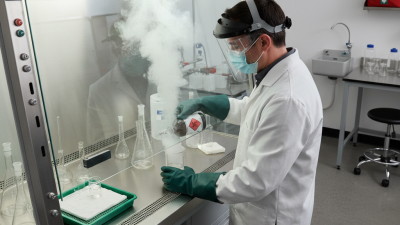
Concentrated nitric acid is widely used across various industries. It is highly corrosive and can cause severe injury if not handled properly. Understanding safety protocols is essential for anyone working with this chemical. Basic safety gear includes gloves, goggles, and protective clothing. These items safeguard against potential splashes and vapors.
When handling concentrated nitric acid, it is critical to work in a well-ventilated area or fume hood. This reduces exposure to harmful fumes. Always store the acid in a dedicated, labeled container away from incompatible substances. Improper storage can lead to dangerous reactions, resulting in hazardous situations.
In case of exposure, immediate action is necessary. Rinse the affected skin with water for at least 15 minutes. Remove any contaminated clothing promptly. It’s vital to have a safety data sheet accessible for guidance in emergencies. Regular training on safe handling practices helps reinforce the importance of safety in the workplace. This should not be overlooked; neglecting proper procedures is a potential risk.
Top Uses of Concentrated Nitric Acid for Global Buyers
| Application |
Industry |
Safety Protocols |
Handling Procedures |
| Fertilizer Production |
Agriculture |
Wear PPE, ensure ventilation |
Store in cool, dry place |
| Metal Etching |
Manufacturing |
Use fume hoods; avoid skin contact |
Follow MSDS guidelines for storage |
| Explosives Manufacturing |
Chemicals |
Use in controlled environments |
Store away from incompatible materials |
| Waste Water Treatment |
Environmental |
Monitor pH levels, use PPE |
Handle in well-ventilated areas |
| Pharmaceuticals |
Healthcare |
Keep away from direct sunlight |
Follow specific handling instructions |
Environmental Impact and Regulatory Considerations of Nitric Acid Use
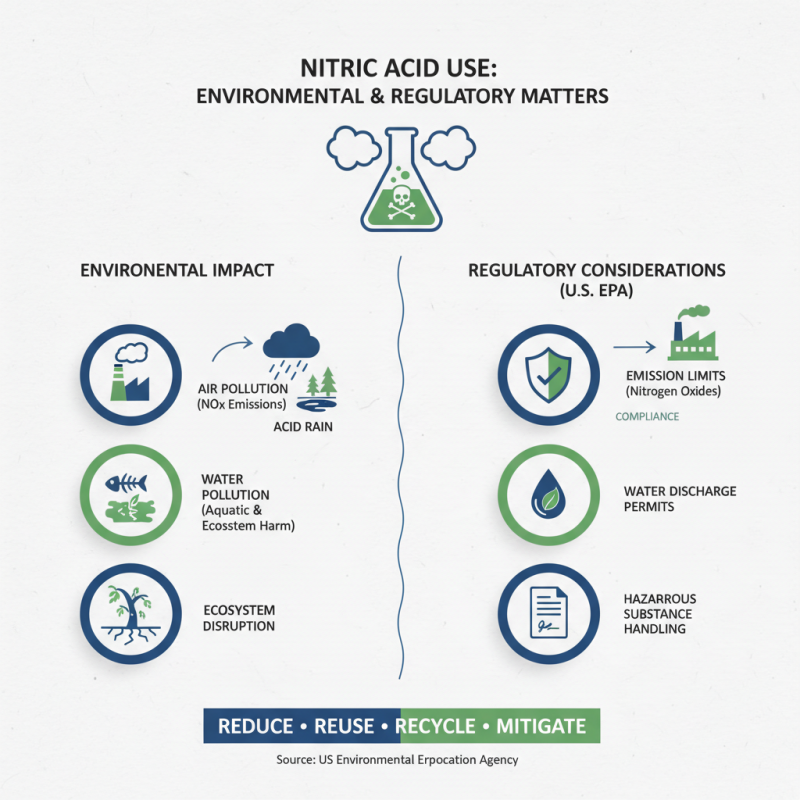
Concentrated nitric acid has various applications in industries, yet its environmental impact is significant. The production and use of nitric acid contribute to air and water pollution. According to the U.S. Environmental Protection Agency, nitric acid production releases nitrogen oxides (NOx), which can lead to acid rain. This can affect aquatic life and disrupt ecosystems.
Regulatory frameworks vary worldwide. Many countries enforce strict guidelines on nitric acid emissions. The European Union, for example, mandates emissions limits to protect environmental health. Compliance is critical to ensure sustainability and prevent regulatory penalties. Industries must adapt to these evolving regulations, which often require investment in cleaner technologies.
**Tips:** Always assess local environmental laws. Understanding regulatory considerations can save time and resources. Engaging with environmental experts is beneficial for compliance. Establishing a robust environmental management system can help protect ecosystems. Proper training for employees on handling nitric acid safely is essential to minimize risks.
Emerging Trends in the Market for Concentrated Nitric Acid Products
Emerging trends in the market for concentrated nitric acid products highlight significant shifts in industry demands. Industries today are increasingly focusing on sustainability. This shift has led to the development of eco-friendly nitric acid production methods. Companies now prioritize cost-effective and safer processing techniques. These methods reduce waste and limit environmental impact.
Another notable trend is the growing application of concentrated nitric acid in various sectors. Agriculture relies on it for producing fertilizers. This reliance boosts crop yields and enhances food security. The pharmaceutical industry also utilizes this chemical for producing vital compounds. The demand for high-purity nitric acid in drug production is on the rise.
Despite these advancements, challenges persist. Supply chain disruptions can affect the availability of nitric acid. Also, strict regulations pose obstacles. Companies must navigate these rules carefully to ensure compliance. Fostering innovation will be key in overcoming these hurdles. Tailored solutions may emerge, focusing on efficiency and performance in this evolving landscape.