How to Use Sodium Nitrite Powder Safely and Effectively?
Sodium Nitrite Powder is a versatile chemical compound used in various applications. It plays a significant role in food preservation and curing meats. However, safety is paramount when using this substance.
Understanding its properties and potential risks is crucial. Sodium Nitrite Powder can be beneficial if handled correctly. Misuse or accidental exposure can lead to serious health concerns. Therefore, having a clear understanding of safe handling practices is essential for everyone.
In this guide, we will explore effective methods to use Sodium Nitrite Powder appropriately. Through practical tips and safety guidelines, you can ensure that you are using this compound securely. Remember, knowledge and caution go hand in hand in handling chemicals like sodium nitrite.
Understanding Sodium Nitrite Powder and Its Uses
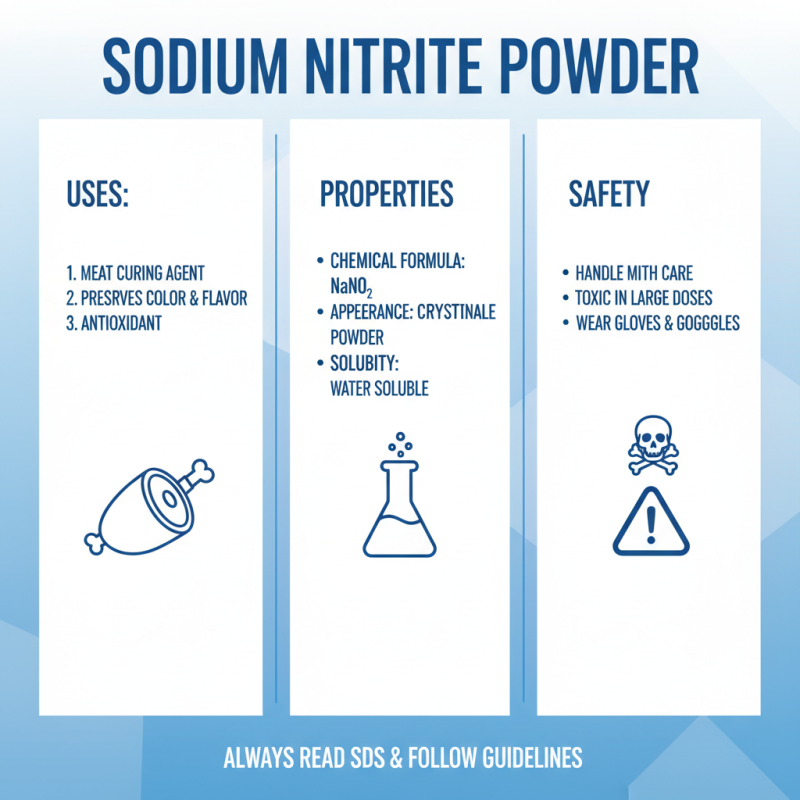
Sodium nitrite powder is a versatile substance. It is commonly used as a curing agent in meats. This powder helps preserve color and flavor. Additionally, it acts as an antioxidant. However, it’s crucial to understand its properties and handle it safely.
When using sodium nitrite, accurate measurement is key. Excessive amounts can be harmful. Make sure to follow recipes carefully. Always wear gloves and a mask when handling the powder. This helps reduce exposure to dust. Keep it in a cool, dry place. Proper storage is essential to maintain its effectiveness.
Tips: Avoid direct contact with skin. Wash hands thoroughly after use. It’s easy to overlook safety, but your health matters. Consider practicing with small amounts first. This builds confidence in handling it. Always remember—safety should never be compromised for convenience.
Safety Precautions When Handling Sodium Nitrite Powder
When handling sodium nitrite powder, safety is paramount. Always wear protective gear, including gloves, goggles, and a mask. These items serve as barriers against potential hazards. Skin contact can lead to irritation. A simple splash in the eye can cause discomfort or damage. It’s wise to have clean water nearby in case washing is necessary.
Work in a well-ventilated area. Adequate airflow prevents the buildup of harmful fumes. Avoid overlooking this aspect, as stagnant air can pose risks. Use proper containers for storage. Ensure they are clearly labeled. Mislabeling can lead to mix-ups. Handle the powder with care, as spills can happen—even to the most careful individuals. Always keep it out of children’s reach.
In case of accidental ingestion, seek medical help immediately. Sometimes, it’s easy to think accidents won’t happen to you. However, a moment of distraction can lead to serious issues. Regularly check safety protocols to reflect on your handling practices. This reflection is crucial for ensuring a safe environment. Assess what methods may need improvement and stay aware.
Effective Techniques for Measuring Sodium Nitrite Powder
Measuring sodium nitrite powder accurately is crucial for safety and efficacy. Start by gathering the right tools. A digital scale can provide precise measurements. Ensure the scale is calibrated. A small spoon or scoop can help with transfer. However, using it alone may lead to inaccurate dosing.
When measuring, wear gloves and a mask. Sodium nitrite can be harmful if inhaled or absorbed through the skin. Pour the powder into a clean, dry container. A funnel can help avoid spills. The powder can be light and fluffy, making it easy to underestimate amounts.
Consider using weighing paper to collect the powder. This method allows for quick transfer and minimal loss. Each measurement should be double-checked. Small variances can lead to significant differences in your application. After measuring, seal any unused powder tightly. Store it in a cool, dry place away from direct sunlight. Stay organized to prevent contamination or confusion with other substances.
Proper Storage Methods for Sodium Nitrite Powder
Proper storage of sodium nitrite powder is crucial for safety and effectiveness. Keep it in a cool, dry place. High temperatures and humidity can lead to degradation. Use airtight containers to prevent moisture absorption. Glass or heavy plastic is ideal for this.
Labeling the container is essential. Ensure it is marked clearly and legibly. It helps in quick identification and avoids accidental misuse. Check your storage area regularly for any signs of leaks or spills. Unattended storage can lead to accidents, which should be avoided at all costs.
Consider using dedicated storage spaces. This not only protects the powder but also keeps it away from children and pets. If you notice any changes in color or texture, dispose of the material safely. Regular assessment helps in recognizing potential hazards. However, often people forget this step, leading to pitfalls. Always prioritize safety in your practices.
Usage and Safety of Sodium Nitrite Powder
Common Applications and Recipes Using Sodium Nitrite Powder
Sodium nitrite powder is commonly used in various food applications. It's well-known for its role in preserving meats and enhancing flavors. Many recipes utilize it, especially in curing processes. For instance, it's critical in making traditional sausages and deli meats. A 2020 report from the Institute of Food Technologists highlighted that sodium nitrite can inhibit the growth of harmful bacteria, such as Clostridium botulinum, making it essential for food safety.
Tip: Always measure sodium nitrite accurately. Too much can lead to health risks.
In addition to meat curing, sodium nitrite can be used in brines for pickling vegetables. It adds flavor and preserves color. However, it is essential to monitor the amount used in recipes. Some chefs recommend using it sparingly. Overuse can alter the taste and potentially lead to negative health effects. A balance is key.
Tip: Start with small amounts in your recipes. Adjust based on taste and safety needs.
Experimenting with sodium nitrite in smoked foods is also popular. It can enhance the depth of flavor and improve shelf life. But be cautious. The line between proper use and misuse can be thin. Consider the chemical reactions it undergoes during cooking. Understanding these can lead to better outcomes.
How to Use Sodium Nitrite Powder Safely and Effectively?
| Application |
Usage |
Safety Precautions |
Common Recipes |
| Preservation of Meat |
Used in curing meats like bacon and sausages. |
Always wear gloves and a mask when handling. |
Cured Ham Recipe: Combine sodium nitrite, salt, and sugar for a flavorful cure. |
| Color Fixative |
Enhances color in cured meats. |
Store in a cool, dry place away from children. |
Hot Dogs: Mix with spices and meat mixture for vibrant color. |
| Chemical Reagent |
Used in laboratory settings for various chemical reactions. |
Handle with care to avoid inhalation and skin contact. |
Not applicable (laboratory use only). |
| Food Additive |
Utilized in small quantities to enhance flavor. |
Follow recommended usage guidelines carefully. |
Bacon: Add to brining solution for rich flavor. |
| Culinary Applications |
Incorporated in gourmet cooking for specific recipes. |
Avoid excessive usage to prevent health risks. |
Sausage Making: Critical for flavor and preservation. |