What Is Water Soluble Potassium Fertilizer?
Water Soluble Potassium fertilizer is a source of potassium that dissolves in water, making its nutrients available in solution. It is commonly used in fertigation systems and, when the product label allows, in foliar applications. You may encounter products based on potassium nitrate, potassium sulfate, or potassium chloride. Their nutrient content and accompanying elements differ, so the product name alone is not enough.
Potassium supports water regulation, enzyme activity, and the movement of sugars within plants. A crop with an appropriate potassium supply may handle ordinary water stress better, but fertilizer cannot replace sound irrigation or correct every cause of poor growth. That distinction matters. In practice, application rates should reflect crop needs, soil or substrate test results, water quality, and the fertilizer’s analysis. A visible symptom, such as leaf-edge scorching, is not proof of potassium deficiency; salinity, disease, or other nutrient issues may look similar.
Solubility is useful, but it is not a guarantee of suitability. Concentrated solutions can cause problems if mixed or applied incorrectly, and chloride-sensitive crops may not suit every potassium source. Check compatibility, dilution instructions, and crop guidance before use. Small details count. Water Soluble Potassium can offer precise nutrient delivery, yet the best choice depends on the crop, growing system, and conditions at the root zone. Even careful recommendations have limits, so testing and follow-up observations remain important.
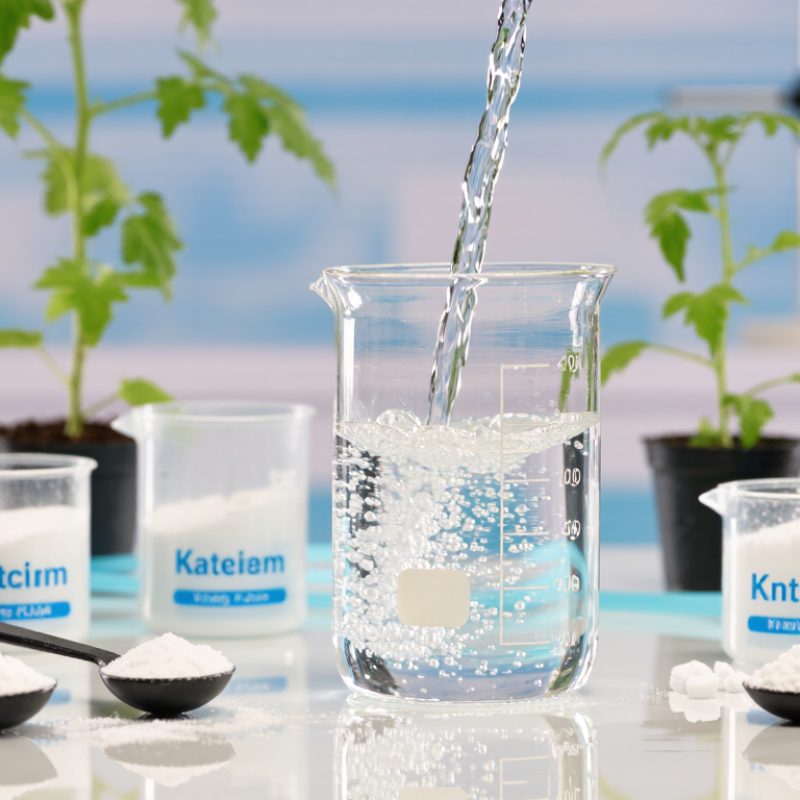
Definition and Key Characteristics of Water-Soluble Potassium Fertilizer
What Is Water Soluble Potassium Fertilizer?
Definition and Key Characteristics of Water-Soluble Potassium Fertilizer
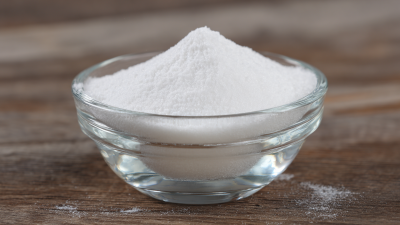
Water-soluble potassium fertilizer dissolves in water, releasing potassium ions that plants can absorb through their roots. Common forms include potassium chloride, potassium sulfate, and potassium nitrate. Their accompanying nutrients differ, so the product choice matters: potassium sulfate also supplies sulfur, while potassium nitrate supplies nitrogen. Check the nutrient analysis, not just the product name.
Solubility supports precise application through irrigation systems, where dissolved fertilizer travels with water to the root zone. The USGS Mineral Commodity Summaries 2025 estimates global potash mine production at 49 million metric tons of K₂O in 2024. This figure covers potash production broadly, not water-soluble fertilizer alone, but it shows the scale of potassium supply. In practice, clean tanks and fully dissolved granules help reduce clogging. Small crystals can linger at the bottom.
“Water-soluble” does not mean every formulation suits every field. High salt concentration can stress roots, and water quality may affect mixing. A grower should consider crop needs, soil tests, irrigation volume, and the fertilizer’s other nutrients. Even a clear solution is not proof of correct dosing. That detail is easy to miss.
Common Types and Chemical Forms
What Is Water Soluble Potassium Fertilizer?
Common Types and Chemical Forms
Water-soluble potassium fertilizers dissolve in water to provide potassium for roots or leaves. Their chemical forms matter because each supplies different companion nutrients. Potassium nitrate (KNO₃) provides nitrogen, while monopotassium phosphate (KH₂PO₄) supplies phosphorus. Potassium sulfate (K₂SO₄) adds sulfur and is often selected when chloride needs to be limited. The counter-ion matters. Potassium chloride (KCl), also called muriate of potash, is highly soluble, but its chloride content may not suit chloride-sensitive crops or saline conditions.
These materials are not interchangeable. A grower choosing a fertilizer for drip irrigation should consider crop nutrient needs, water quality, and the compatibility of products in the same tank. For example, mixing concentrated phosphate with calcium-rich water can create precipitates that clog emitters. Small jar tests can reveal some problems before a full batch is prepared, though they do not replace water analysis. Check the product’s solubility guidance, too; cool water and high concentrations can leave undissolved material. A fertilizer may be described as water soluble, yet handling still takes care. Too much potassium can also interfere with magnesium or calcium uptake. The right form depends on the whole nutrient plan, not potassium alone.
What Is Water-Soluble Potassium Fertilizer?
Water-soluble potassium fertilizers dissolve in water to provide potassium for fertigation or other appropriate applications. Common chemical forms include potassium chloride, potassium sulfate, potassium nitrate, and monopotassium phosphate.
Typical fertilizer grades are shown as potassium oxide equivalent (K₂O), not as elemental potassium. Actual grades can vary by product.
How Potassium Supports Plant Growth
What Is Water Soluble Potassium Fertilizer?
How Potassium Supports Plant Growth
Water-soluble potassium fertilizer dissolves in water, making potassium available for uptake through moist soil or fertigation. Inside plants, potassium helps activate enzymes, regulate stomata, and move sugars from leaves to developing fruit and roots. The FAO’s Plant Nutrition for Food Security (2006) describes potassium’s role in water regulation and crop growth. This matters on a hot afternoon, when a plant’s stomata must balance carbon dioxide intake against water loss. Potassium supports that process; it does not replace good irrigation or healthy roots.
Crop demand varies. The International Plant Nutrition Institute’s Nutrient Removal by Crops data estimate that harvested corn grain removes about 0.27 pounds of K2O per bushel, compared with roughly 1.15 pounds per bushel for soybean grain. Different crops, different needs. Those figures describe nutrient removal, not a universal fertilizer rate. Soil tests and realistic yield goals should guide application. It is tempting to treat fast solubility as proof that more is better. It isn’t. Excess potassium can interfere with magnesium uptake, and sandy soils may lose soluble nutrients more readily. Check the field, not just the fertilizer label.
What Is Water Soluble Potassium Fertilizer? - How Potassium Supports Plant Growth
| Fertilizer type |
Typical analysis
(N–P2O5–K2O) |
Approx. solubility at 20°C |
Other nutrients supplied |
Practical considerations |
| Potassium chloride (muriate of potash) |
0–0–60 (typical grade) |
About 34 g per 100 g water |
Chloride |
A concentrated, widely used potassium source. Consider crop sensitivity to chloride and the salinity of the irrigation water or growing medium. |
| Potassium sulfate (sulfate of potash) |
0–0–50 (typical grade) |
About 11 g per 100 g water |
Sulfur |
Provides potassium without chloride and also supplies sulfur. It is less soluble than potassium chloride or potassium nitrate, so check mixing and application requirements. |
| Potassium nitrate |
13–0–46 (typical grade) |
About 32 g per 100 g water |
Nitrate nitrogen |
Supplies both potassium and nitrogen. Account for its nitrogen contribution when planning the total fertilizer program. |
| Monopotassium phosphate |
0–52–34 (typical grade) |
About 23 g per 100 g water |
Phosphate |
Provides phosphorus as well as potassium. Avoid unintended excess phosphorus by considering soil or substrate test results. |
| How potassium supports plant growth |
| Water balance and stomatal function |
Potassium helps regulate water movement and the opening and closing of stomata, which influence gas exchange and water loss. |
| Enzyme activity and metabolism |
Potassium activates many enzymes involved in plant metabolism, supporting processes needed for healthy growth. |
| Carbohydrate movement |
Adequate potassium supports the movement of sugars from leaves to growing tissues and storage organs. |
| Stress response and crop quality |
A sufficient potassium supply can support plant water relations and crop quality. It does not replace other nutrients, and extra potassium does not necessarily improve growth when plants already have enough. |
| Use note |
Fertilizer analyses are typical grades, and product specifications can vary. Solubility figures are approximate at 20°C and are expressed as grams of fertilizer per 100 grams of water. Choose a source and application rate based on crop needs, soil or substrate tests, water quality, and label directions. |
Uses Across Crops and Growing Systems
What Is Water Soluble Potassium Fertilizer?
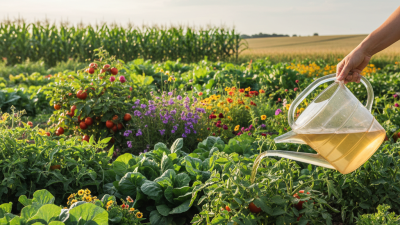
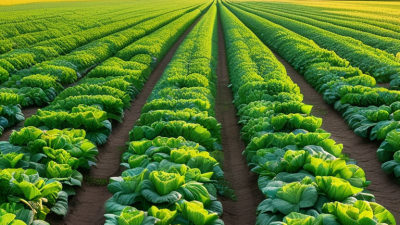
Water-soluble potassium fertilizers dissolve in irrigation water, delivering potassium through drip lines, sprinklers, or nutrient tanks. Potassium supports water regulation, enzyme activity, and the movement of sugars within plants. It matters during fruit filling in tomatoes, tuber development in potatoes, and bunch growth in bananas. In fertigation, growers can adjust delivery as crop demand changes. Small doses. Close monitoring.
The system affects the choice. Greenhouse tomatoes and hydroponic leafy crops need a consistent nutrient solution, so growers track electrical conductivity and watch for salt buildup around roots. In open fields, fertigation can place potassium near active roots, while soil tests help avoid unnecessary applications. Potassium chloride is widely used, but chloride-sensitive crops may require another source, such as potassium sulfate. The FAO’s World Fertilizer Trends and Outlook to 2026 projected global potash demand to grow by about 3.5% annually over its forecast period. That signals broad demand, not a prescription for every farm. Crop removal, soil texture, irrigation-water quality, and yield targets still shape the rate. Even a well-calculated schedule can miss local variation. A field is not a spreadsheet.
Application Methods and Handling Considerations
What Is Water Soluble Potassium Fertilizer?
Application Methods and Handling Considerations
Water-soluble potassium fertilizer provides potassium in a form that dissolves in water for targeted delivery. Common options include potassium sulfate, potassium nitrate, and potassium chloride. Their accompanying nutrients and suitability differ, so choose according to crop needs, soil or water test results, and the product label.
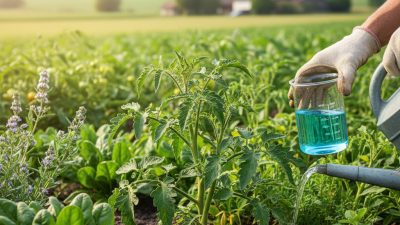
For fertigation, dissolve the measured amount fully before feeding it through clean lines. A small jar test can reveal sediment or unexpected reactions with other products. Avoid mixing concentrated solutions unless compatibility has been confirmed; calcium-containing mixes can form deposits with some fertilizers. Flush lines. Use measured, consistent doses; applying more may not improve plant growth.
Foliar application can help in specific situations, but it does not replace sound root-zone nutrition. Follow label rates, test a small area, and avoid spraying during hot, bright hours to reduce leaf injury. Wear gloves and eye protection when handling dry powder, and avoid breathing dust. Keep bags sealed, dry, and off damp floors. Check first. Even careful growers can overlook residue in a scoop or container.