White Fuming Nitric Acid is a highly concentrated industrial oxidizer with specialized applications. Its clear appearance can be misleading. In open air, it may release dense white fumes and corrosive vapors. The U.S. Environmental Protection Agency’s AP-42 guidance identifies nitric acid production as an important source of nitrogen oxide emissions. This context matters because industrial value depends on controlled storage, closed systems, and verified environmental performance.
What is White Fuming Nitric Acid used for? Its principal uses involve high-performance aerospace research, specialized chemical processing, and selected analytical or manufacturing operations. In aerospace programs, it has historically served as an oxidizer in certain liquid-propellant systems. These applications require certified materials, remote handling, and strict institutional oversight. The European Commission’s Best Available Techniques Reference Document for Large Volume Inorganic Chemicals also emphasizes emission control, process containment, and worker protection across nitric acid facilities.
It also supports demanding nitration and oxidation chemistry, although commercial facilities often choose safer or more practical nitric acid grades. Product selection depends on purity, concentration, compatibility, and lifecycle risk. That judgment is often overlooked. Market studies from Grand View Research and similar industry analysts usually group nitric acid by broad product categories, rather than isolating White Fuming Nitric Acid. Therefore, its market size is difficult to estimate reliably from public data.
The most responsible answer is not simply “fuel” or “chemical processing.” White Fuming Nitric Acid is a tightly controlled specialty material. Its legitimate value comes from precision, performance, and traceable management. Its hazards remain substantial. Any discussion should prioritize safety data, regulatory compliance, qualified personnel, and verified industrial procedures.
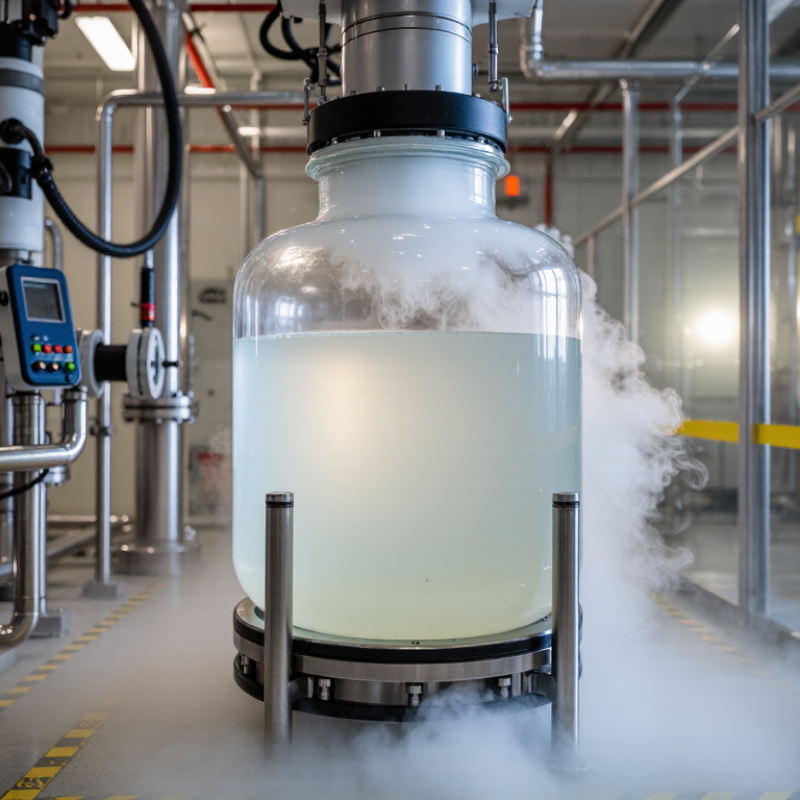
White fuming nitric acid is a highly concentrated form of nitric acid, typically containing about 97–99% HNO₃. Its pale appearance comes from having relatively little dissolved nitrogen dioxide. Red fuming nitric acid contains more nitrogen dioxide, which gives it a reddish-brown color and stronger visible fumes. By comparison, ordinary concentrated nitric acid is commonly around 68–70% HNO₃ and is less concentrated. These figures are typical, not universal; product specifications can vary. The labels are not perfectly tidy.
That difference matters in industrial handling and process selection. White fuming nitric acid is used as a specialized nitrating and oxidizing reagent in controlled chemical manufacturing, where concentration and water content affect process performance. It is not simply stronger ordinary acid
: its low water content and volatile, corrosive fumes require distinct equipment and safeguards. The NIOSH Pocket Guide sets occupational exposure limits for nitric acid at 2 ppm as a time-weighted average and 4 ppm as a 15-minute ceiling. Those limits underline why fuming forms demand strict exposure controls. Even the color is only a clue, not a reliable substitute for checking a supplier’s composition data or safety documentation.

White fuming nitric acid is valued in chemical processing for its high oxidizing strength and low water content. The “white fuming” grade is highly concentrated, so it can support oxidation and nitration processes where dilute acid may not provide the required chemistry. Its role is not simply to make reactions faster. Concentration, temperature control, and material compatibility all affect selectivity and product quality.
The U.S. Environmental Protection Agency’s AP-42 profile on nitric acid production describes commercial acid strengths ranging from roughly 30% to concentrated grades near 99%. That range illustrates why processors choose a grade suited to the reaction rather than treating all nitric acid as interchangeable. In a properly designed plant, enclosed equipment, compatible linings, and monitored feed systems help manage the acid’s corrosive and oxidizing behavior. Even small changes in water content can matter. That detail is easy to overlook.
Process engineers also weigh heat release, off-gas treatment, and contamination risks before selecting a strong oxidizer. The European Chemicals Agency’s substance information identifies nitric acid as corrosive and capable of intensifying fire, reinforcing the need for rigorous hazard controls. White fuming nitric acid can serve specialized chemical production, but it is not a universal upgrade: stronger acid may complicate handling and equipment selection without improving every process.
Representative nitric acid concentrations by grade (weight percent)
White fuming nitric acid (WFNA) is a highly concentrated oxidizer used in specialized chemical processing, including energetic-materials manufacture and certain propulsion applications. The chart shows approximate representative concentrations, not universal specifications; actual grades vary. WFNA is extremely corrosive and toxic and requires specialized handling.
White fuming nitric acid has been used as a powerful oxidizer in some rocket-propulsion systems. In certain designs, it reacts on contact with a compatible fuel, removing the need for a separate ignition source. This property can support compact propulsion architectures, including specialized aerospace systems where reliable starting matters. Its role is not to provide the main energy; it helps the fuel release energy through combustion. That distinction is easy to overlook.
Its use comes with serious engineering constraints. The liquid is highly corrosive and toxic, and its fumes can cause severe harm. Materials compatibility, containment, and remote handling are central concerns in any legitimate research or industrial setting. Aerospace engineers weigh these hazards against system requirements, such as storage duration and restart capability. The trade-offs are substantial, and historical use does not make the substance suitable for ordinary applications.
Tips: Treat descriptions of nitric-acid propulsion as technical background, not handling guidance. Never infer safe materials or procedures from general information. Even small leaks can create dangerous exposure, so assessment belongs to qualified professionals using established safety controls.
White fuming nitric acid is a highly corrosive oxidizer used in specialized, tightly controlled industrial settings. Its relevance to energetic materials comes from its ability to support oxidation, not from being a fuel itself. In explosives research and production, qualified facilities may use it as a chemical feedstock or processing reagent under approved procedures. The exact role depends on the material and the facility. This is not a substance for casual handling.
It also has applications in some rocket-propellant systems, where oxidizers help provide the chemical energy needed for propulsion. Energetic-material laboratories may study its behavior when assessing performance, compatibility, or storage risks. Such work requires trained personnel, engineered containment, and rigorous safety oversight; practical formulations and handling instructions do not belong in general guidance. Details matter. A small change in conditions can create serious hazards, and even experienced teams must account for corrosion, toxic fumes, and heat release. Its industrial value is real, but the risks deserve equal attention.
White fuming nitric acid is a highly corrosive, volatile oxidizing liquid used in specialized industrial and laboratory processes. Its fumes can injure eyes and lungs, while contact can cause severe burns. The NIOSH Pocket Guide lists a recommended exposure limit of 2 ppm as a time-weighted average and 4 ppm as a short-term limit. Treat even a small spill as a serious exposure risk. Do not rely on odor to judge safety.
Storage requires compatible, corrosion-resistant containers, secure secondary containment, and a cool, well-ventilated area away from combustible materials and incompatible chemicals. Keep containers closed and clearly labeled; inspect them for leaks or damage under site procedures. OSHA’s laboratory and hazard communication requirements call for appropriate hazard information, training, and protective measures. Applicable transport and local rules may add requirements, so verify them with a qualified safety professional. Small details matter.
Tips: Follow the current safety data sheet and your facility’s written procedures. Use suitable ventilation and protective equipment selected through a documented risk assessment. Keep emergency eyewash and safety showers accessible, and ensure workers know how to raise an alarm. Never improvise cleanup or transfer methods.
| Topic | Key Information | Practical Implications |
|---|---|---|
| What it is | White fuming nitric acid (WFNA) is a highly concentrated nitric acid formulation with relatively little dissolved nitrogen dioxide compared with red fuming nitric acid. Exact composition varies by specification. | Check the product label and current safety data sheet (SDS); do not identify a material by color alone. |
| Common uses | Specialty chemical synthesis and nitration processes, and use as a strong oxidizer in certain propulsion-related applications. | These are controlled industrial or research uses, not general-purpose applications. Work should be limited to trained personnel using approved procedures. |
| Corrosive and oxidizing hazards | Can cause severe skin and eye burns, damage the respiratory tract, and intensify fires by oxidizing combustible materials. Contact with incompatible substances may cause violent reactions. | Use a site-specific risk assessment, suitable engineering controls, and PPE selected from the SDS and workplace procedures. Do not rely on ordinary work clothing or gloves without verifying compatibility. |
| Fumes and exposure | Fuming or mist can expose workers to corrosive acid and nitrogen oxide hazards. Inhalation may cause serious lung injury, and effects can be delayed. | Use appropriate closed handling or local exhaust ventilation. Follow the facility’s emergency plan and seek immediate medical evaluation after suspected exposure. |
| Storage needs | Store in a compatible, properly labeled container in a cool, dry, well-ventilated, secure area, following the supplier’s SDS and container requirements. Protect from heat and conditions that could damage the container. | Use suitable secondary containment and inspect containers and storage areas as required by site procedures. Confirm material compatibility with the supplier rather than assuming a container material is suitable. |
| Segregation | Keep separated from incompatible materials, which may include organic or combustible substances, reducing agents, bases, and other chemicals identified in the SDS. | Establish segregation based on a documented compatibility review. Prevent shared containment or spill pathways from bringing incompatible materials together. |
| Spill and emergency planning | A release may create corrosive fumes and a serious exposure or fire hazard. Cleanup can require specialized training, equipment, and emergency response arrangements. | Do not treat an unknown or significant release as a routine cleanup. Follow the facility emergency plan, isolate the area, and contact trained responders. |
| Regulatory controls | Requirements depend on location, concentration, quantity, and activity. They may cover hazard communication, worker protection, process safety, chemical inventory and reporting, environmental releases, and dangerous-goods transport. | In the United States, relevant frameworks can include OSHA hazard communication and applicable EPA requirements; transport classification and shipping rules must be confirmed for the specific product and shipment. Check current local and national rules. |
| Safe-use baseline | Only trained and authorized personnel should handle WFNA under written procedures and appropriate facility controls. | Before use or storage, review the current SDS, confirm compatibility and emergency arrangements, and consult qualified safety and regulatory professionals. |
Note: This overview is general information, not a substitute for the product-specific SDS, a formal risk assessment, or applicable regulatory advice.