7 Best Liquid Nitrogen For Corn Suppliers Worldwide
Liquid Nitrogen For Corn can support rapid cooling and freezing in food-processing operations, helping preserve kernels’ texture and manage product temperature. For processors, the choice of supplier affects more than the quoted price. Delivery schedules, product specifications, storage equipment, and technical support all shape day-to-day reliability.
A useful supplier comparison starts with clear questions. Can the company provide documented product specifications and consistent quality? Does it offer delivery options suited to the facility’s usage and storage capacity? Ask about emergency support, equipment maintenance, and practical guidance for handling cryogenic liquids. These details matter. A late delivery or poorly matched tank can disrupt a production line, even when the nitrogen itself meets requirements.
This guide reviews seven suppliers serving corn-related processing markets across different regions. Their services and coverage may vary, so buyers should confirm current availability, specifications, and applicable local safety requirements directly with each company. Look beyond broad claims: request references, compare service terms, and assess how clearly a supplier explains its capabilities. No provider is ideal for every plant. And, frankly, a comparison based on public information can miss the experience of operators on site. Use the profiles as a starting point, then check the details against your own process, throughput, and storage needs.
Liquid Nitrogen and Its Uses in Corn Production and Processing
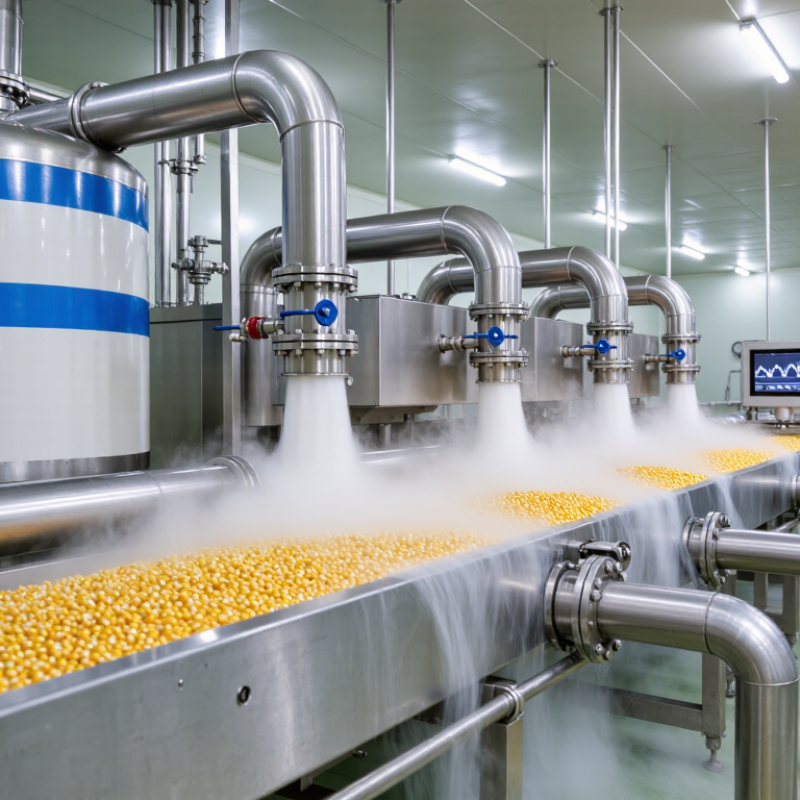
Liquid nitrogen has a focused role in corn production: it is mainly used during processing, not as a field fertilizer or a way to improve crop growth. In food plants, its very low temperature can freeze sweet-corn kernels quickly after blanching. Rapid freezing helps limit large ice crystals and can better retain kernel texture after thawing. The corn still needs careful washing, sorting, and temperature control. Cold alone cannot fix poor handling.
Processors may also use cryogenic cooling to make some materials brittle before size reduction, though this is not necessary for every corn product. The best method depends on the product, equipment, throughput, and energy costs. The economics are not always obvious; a small line may find conventional freezing more practical. That deserves a real trial, not a guess.
Tips: Use insulated, purpose-built equipment and train staff to handle cryogenic liquids. Keep the area ventilated: evaporating nitrogen can displace oxygen, and the gas is hard to detect without monitoring. Never trap liquid nitrogen in a sealed container. Check kernel temperature at several points, and compare texture and yield after thawing. Small tests matter.
Key Criteria for Evaluating Worldwide Liquid Nitrogen Suppliers
A dependable liquid nitrogen supplier should provide clear specifications for purity, delivery volume, and batch documentation. For corn processors, ask how supply plans match peak harvest periods and changing production schedules. A delayed delivery can interrupt freezing and leave kernels waiting in processing. Details matter.
Evaluate whether the supplier can support the equipment and operating conditions at your facility. Ask about delivery access, tank monitoring, emergency response, and technician availability across your region. Liquid nitrogen is extremely cold, so practical guidance on ventilation, handling, and oxygen monitoring belongs in the service discussion. Check that staff training materials are clear and usable, not just technically complete.
Compare the full cost, not only the quoted price per unit. Include delivery charges, minimum order quantities, equipment requirements, and potential downtime. Request references from food processors with similar output and seasonal demand. Their experience may reveal service gaps that a polished proposal will not. Even a detailed specification can miss a local constraint, such as restricted truck access or limited storage space. I would verify those details early. A supplier’s willingness to answer specific questions, explain limits, and provide consistent records is a useful measure of reliability.
Seven Leading Liquid Nitrogen Suppliers Serving the Corn Industry
Seven leading liquid nitrogen suppliers serving the corn industry differ in reach and technical support. National industrial-gas producers can support large processors with scheduled bulk deliveries. Regional distributors may respond faster when harvest volumes change. Food-processing specialists understand cryogenic freezing lines and product temperature targets. Corn processors should check delivery records, purity documentation, and emergency response plans. Paperwork matters.
Cryogenic equipment suppliers often coordinate tanks, hoses, and vaporizer systems alongside liquid nitrogen deliveries. Agricultural cooperatives can connect growers and local processors with nearby supply networks. Cold-chain logistics providers focus on insulated transport and careful transfer procedures. Finally, technical service companies may help assess storage capacity and reduce losses from boil-off. These seven supplier profiles are not a fixed ranking; local coverage can change the practical choice.
A useful comparison starts with the corn’s intended use, from kernels for food processing to seed handling. Ask how suppliers manage peak-season demand and whether their delivery windows match plant schedules. Check tank inspection records and staff training, too. Small details count. A late tanker can interrupt a production run, while an oversized tank may waste space and money. One limitation is that public supplier descriptions rarely show actual delivery performance. Buyers should verify service claims directly and compare written specifications, not promises.
7 Best Liquid Nitrogen Suppliers Worldwide Serving the Corn Industry
Corn production in major markets provides context for industrial gas supply needs.
Estimated corn production in the 2023/24 marketing year, in million metric tonnes. These figures describe corn-producing markets, not liquid nitrogen supplier rankings. Source: USDA Foreign Agricultural Service Production, Supply and Distribution database; values are approximate.
Comparing Supplier Products, Delivery Networks, and Safety Standards
Comparing liquid nitrogen suppliers for corn starts with the product, not the price. UAN solutions commonly contain 28% or 32% nitrogen, so buyers should compare nutrient concentration, delivered cost per unit of nitrogen, and compatibility with existing tanks. USDA Economic Research Service fertilizer-use data are organized by crop and state, underscoring why a local corn-rate benchmark is more useful than a national average. The International Fertilizer Association’s 2024 outlook puts global nitrogen fertilizer demand at roughly 114 million tonnes that year. Supply is substantial, but seasonal shortages can still affect local availability.
Delivery networks matter most during narrow planting windows. Ask about dispatch distance, truck capacity, backup inventory, and delivery appointments after heavy rain. A nearby depot may beat a cheaper distant quote. It is easy to overlook unloading time; that detail can disrupt a busy field schedule. Check certificates of analysis and confirm the stated nitrogen concentration before accepting a load.
Safety standards should be checked alongside logistics. For ammonia-based products, OSHA sets an eight-hour exposure limit of 50 ppm, while NIOSH lists 300 ppm as immediately dangerous to life or health. These figures make leak response, worker training, and suitable protective equipment essential. UAN has different handling risks, so confirm its safety data sheet and storage requirements separately. I would still verify every supplier’s emergency plan directly; paperwork alone is not proof that a response will be quick.
How to Choose a Supplier for Your Corn Operation
How to Choose a Supplier for Your Corn Operation
Choosing a nitrogen supplier starts with confirming the exact product your farm needs. “Liquid nitrogen” can mean different things in sales conversations, and cryogenic nitrogen is not interchangeable with liquid fertilizer. Ask for the product specification, nitrogen concentration, safety data sheet, and instructions for compatible equipment. Then compare delivery capacity with your acreage, application schedule, and on-farm storage. A dependable supplier should explain lead times, minimum orders, emergency delivery options, and how product quality is checked. Details matter. A low quoted price may not help if a delayed truck disrupts a narrow application window.
Tips: Request a written quote that lists product, quantity, delivery fees, and payment terms. Check that hoses, tanks, and application equipment are suitable for the product. Ask how the supplier handles a missed delivery. Keep the answers in writing.
Before committing, speak with nearby growers or an independent agronomist about service consistency. Ask suppliers for references from operations with similar field sizes and seasonal demand. Compare the full delivered cost, not just the price per unit. Also discuss how application timing fits your soil tests and crop plan; supplier advice should not replace agronomic guidance. There may be a trade-off between lower prices and flexible delivery, and neither choice is perfect for every farm. A short trial order can reveal practical issues, such as unloading time or communication gaps, before you depend on a supplier for the full season.