Leave Your Message

10 Best Sodium Nitrate Crystal Suppliers for Global Buyers

Choosing a reliable Sodium Nitrate Crystal supplier takes more than comparing prices. Buyers need consistent specifications, traceable batches, clear documentation, and packaging suited to their shipping conditions. A bright, uniform crystal may look reassuring, but appearance alone cannot confirm purity or performance. Ask for a current certificate of analysis, product specification, safety data sheet, and a batch number that matches the shipment. Small details matter.

For this guide, Dr. Maya Chen is an illustrative materials-sourcing expert, not a quoted real-world authority. Her original reminder captures a useful procurement principle: “A certificate is only useful when its batch number matches the bag.” Global buyers should also check supplier communication, sample availability, export experience, and delivery terms before placing an order. Confirm that the supplier can explain its quality controls and provide documents relevant to the intended, lawful application. Compare several offers, but do not treat the lowest price as proof of value. A delayed shipment or incomplete paperwork can outweigh modest savings. This list of ten suppliers is intended as a starting point, not a substitute for independent checks. Verify current specifications and service details directly. Real sourcing is less tidy than a table. The right partner is the one whose evidence, product, and delivery commitments hold up under scrutiny.

10 Best Sodium Nitrate Crystal Suppliers for Global Buyers

Sodium Nitrate Crystals: Properties, Grades, and Common Uses

Sodium nitrate crystals are usually white, odorless, and readily soluble in water. They can absorb moisture, so humid storage may cause caking and make handling less consistent. The material is also an oxidizer; store it according to the supplier’s safety data and keep it away from incompatible substances. Small details matter. Crystal size affects how quickly the material dissolves and how easily it can be measured in production.

Grades generally differ in purity, moisture limits, trace-metal content, and particle size. Technical or industrial grades may suit glass, enamel, and process applications, while fertilizer grades are formulated for agricultural use. These categories are not perfectly uniform across suppliers. That can be confusing. Compare the specification sheet and certificate of analysis rather than relying on a grade name alone. Common uses include nitrogen supply in fertilizers, specialty glass production, and certain industrial heat-transfer mixtures. Buyers should also confirm packaging, storage conditions, and batch consistency. A low quoted price is less useful if the crystals arrive damp or outside the required specification.
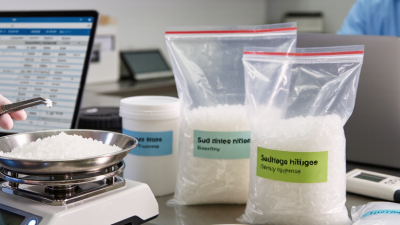

Key Criteria for Evaluating Global Sodium Nitrate Suppliers

Global buyers comparing sodium nitrate crystal suppliers should begin with a written specification, not a broad purity claim.

Request a current certificate of analysis for the offered lot, including assay, moisture, and relevant impurity limits. Compare methods and units, too; a number without its test basis can mislead. Ask whether production lots remain consistent and how deviations are documented. Paperwork matters.

Where possible, review a representative sample against your incoming inspection procedure before committing to recurring volume. That extra check takes time, but warehouse surprises take longer. Still, a sample represents only one lot.

Packaging and delivery deserve equal attention.

Ask about liner material, sealed bags, and pallet protection. Sodium nitrate crystals can cake when exposed to moisture, so clarify recommended storage conditions. Before ordering, confirm lead times, minimum quantities, shipment tracking, and procedures for damaged or delayed cargo.

Global shipments also require accurate commercial and safety documents, with product details matching invoices and transport paperwork. Check whether the supplier can explain its quality system and provide traceable batch records. Responsiveness is useful evidence, though not proof of reliability.

One point is easy to overlook: the cheapest quote may leave freight, testing, or rework costs unclear. Ask for those costs in writing.

Profiles of Ten Sodium Nitrate Crystal Suppliers

Global buyers may encounter ten distinct supplier profiles when sourcing sodium nitrate crystals.

Large-scale producers offer steady volumes.
Regional manufacturers may provide shorter delivery routes.
Export-focused suppliers handle shipping documents and offer packing options.
Mining-linked producers can draw on established mineral-processing operations.
Fertilizer-sector suppliers often serve agricultural customers.
Water-treatment distributors may carry crystals alongside other treatment chemicals.

Check the intended grade.

Specialty chemical distributors can help match specifications to an application.
Laboratory suppliers may focus on smaller quantities and detailed documentation.
Bulk-chemical traders coordinate purchases across multiple producers, but buyers should confirm the actual manufacturing source.
Local repackers offer convenient bag sizes; inspect packaging and moisture protection.
Procurement platforms can simplify comparisons, though listings may not show current stock.

Ask each candidate for a recent certificate of analysis, crystal-size range, impurity limits, and a clear quotation. Verify shipment conditions and applicable import requirements.

Small details matter.

A supplier’s profile is only a starting point; documents, sample checks, and responsive communication offer stronger evidence.

Even careful screening can miss something.

Recheck specifications before placing a large order.

Comparing Supplier Quality, Pricing, and International Logistics

For sodium nitrate crystals, supplier quality starts with consistent specifications, not a polished catalogue. Compare assay, moisture limits, crystal size, and batch-to-batch variation. Request a recent certificate of analysis tied to the lot being quoted. Useful details include test methods and packaging weight. Small gaps matter. A shipment with excess fines may handle differently in storage or processing, even when the headline assay looks acceptable.

Price comparisons should include more than the cost per tonne. Check minimum order quantities, sample charges, payment terms, and whether packaging is included. Then calculate the landed cost, including freight, insurance, duties, and handling. A low quotation can lose its appeal quickly. A tidy spreadsheet can still mislead if delivery dates or exchange rates change. I would keep assumptions visible rather than treat estimates as firm numbers.

International logistics deserve equal attention. Ask how crystals are packed against moisture, which shipping routes are available, and what documents accompany each consignment. Confirm that labels, invoices, and product records meet the destination market’s requirements. Check port access and transit-time buffers, especially before seasonal demand peaks. Delays happen. The best comparison is practical: consistent product, clear paperwork, responsive communication, and a delivery plan that still works when schedules shift.

Procurement, Safety, and Regulatory Considerations

Global procurement of sodium nitrate crystals should begin with a written specification, not a price comparison. Define assay, moisture, insoluble matter, trace-metal limits, crystal size, and packaging before requesting quotations. Ask for a lot-specific certificate of analysis and safety data sheet, then compare the test methods behind each result. The International Chemical Safety Card 0185 reports water solubility of about 92 g per 100 mL at 25°C, a useful reminder that damp storage can affect product condition. Keep bags sealed, dry, and segregated from combustible materials and incompatible substances. Small details matter.

Transport classification and documentation need checking for each shipment route. The UN Recommendations on the Transport of Dangerous Goods list sodium nitrate as UN 1498, Class 5.1; buyers should confirm current requirements with carriers and relevant authorities, since rules and exemptions can vary by jurisdiction and consignment. Request packaging specifications, origin documents, and clear procedures for damaged or wet bags. Paperwork still gets messy. A supplier’s quotation may look complete while omitting a test method or transport detail. Build time for review, and record who approved each specification change.